Article
I Am a Scientist First, Then a Female Scientist
“I was just curious to see what happens in the human body.”
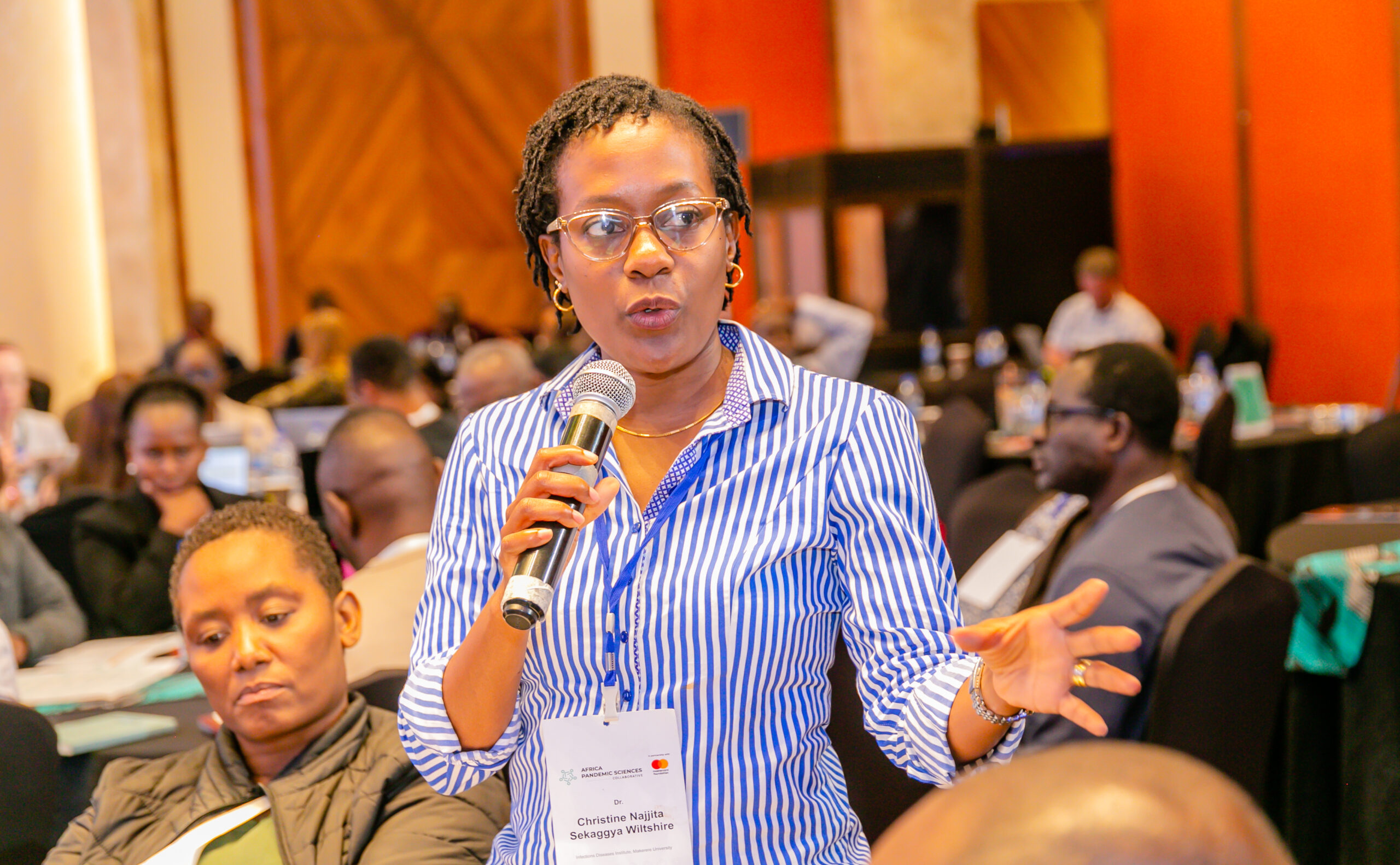
That simple, relentless curiosity set Dr Christine Sekaggya-Wiltshire on a remarkable journey – from a holiday conversation with her uncle to medical school, from internal medicine to a PhD, and from patient care to leading a multi-country scientific research consortium.
Along the way, she confronted doubt, stereotypes, and quiet expectations. Yet she never wavered in her belief that competence should speak louder than gender.
This is her story.
Q: Who is Dr. Christine Sekaggya?
I am a clinician and a scientist – a research scientist, currently working at Uganda’s National Referral Hospital as a physician in haematology. I am also a research scientist at the Makerere University’s Infectious Diseases Institute.
My research has largely focused on HIV and tuberculosis, and I have conducted clinical trials on related drugs. I am deeply excited by academia, but I also love treating patients.
I am married and have six children. When I am not at work, I am with my children, and spending time with them brings me great joy. I also love movies, traveling and visiting new places.
Q: How did your journey into science begin?
At first, I wanted to be like my mother. She was a businesswoman and a lawyer. But when I realised, I would have to study history to pursue law, I thought, maybe not. I liked stories, but I didn’t enjoy being told to memorise and retell them in exams.
I had an uncle living in Nairobi who was both a doctor and a scientist. When I was about 15, I spent my school holiday with him, and he noticed that I was doing well in sciences.
That holiday changed everything. I returned from Kenya saying, “I’m going to do medicine.”
I don’t even remember exactly what he told me. I just knew I had decided to pursue science. Partly, I was avoiding arts subjects. But I was also genuinely curious. I used to tell my mother, “I just want to see what happens in the human body.”
Q: What shaped your journey through medical school and beyond?
Medical school was hard. I failed one of my first tests and quickly realized that what they teach you in class is only a tiny fraction of what you need. You must read the entire textbook.
At first, I wanted to be a surgeon. I liked the feeling of fixing things. But the late nights made me realize it was not compatible with the family life I wanted. Therefore, I chose internal medicine.
During my master’s degree, I used to say I would never do a PhD. But in my third year, I felt a strong urge to pursue one. On the day of my master’s defence, someone told me, “Christine, just get a PhD. No one is going to care what it is in. Just get one.”
At the same time, my department needed haematology specialists. So, I took on that role while starting my PhD in TB drug pharmacokinetics and later training in haematology.
Q: How did you balance science and motherhood?
It is hectic.
One of my professors once told me, “You have to learn to juggle your glass balls.” Children, home, books, patient care, research – they all felt like glass balls.
I received a lot of support from my husband and my mother. I remember expressing breast milk in the postgraduate room between lectures. Everyone could hear the machine. I would drop my baby at my uncle’s house, go to work, return at lunchtime, and then go back again in the evening.
That family support allowed me to thrive.
When there were doubts about my ability to complete my PhD because I had young children, it made me more resilient. Knowing that people were questioning me pushed me to prove that I could do it.
Q: What barriers still exist for women in science?
Sometimes, we do not have a strong go-getter mentality, or we express it more subtly. We hesitate to market ourselves. We downplay our achievements. We do not negotiate salaries as well as men.
We often see many women in middle management and very few at the top. Institutions may have policies that treat everyone equally, but mindsets still matter.
Someone may assume that a man can travel 18 days a month without interruption, while a woman may need to return home. Those assumptions influence decisions.
Q: Are there subtle expectations placed on women in professional spaces?
If there is an event at your organisation, when it comes to organizing food or registration, it is almost always the women. How many times do people ask men to stand up and check if everyone has eaten? Usually, they ask a woman.
The stereotype of what a woman does at home follows her into the workplace.
We do not have to be the ones to serve and handle the “soft” tasks at work. We should be able to make difficult decisions and contribute to strategy just like men.
When we are sitting around a boardroom table, people should see me as a scientist first, and then as a female scientist. Gender can come later. See me first as a scientist.
Q: Why does women’s leadership in science matter?
If we do not break these barriers now, our children will face the same ones.
Women bring a unique perspective to leadership and decision-making. We often look beyond stereotypes and see the human side. Not necessarily in a motherly way, but in a holistic way.
The organisation and awareness we develop at home can translate into the workplace. Equity and gender balance is important in all sectors.
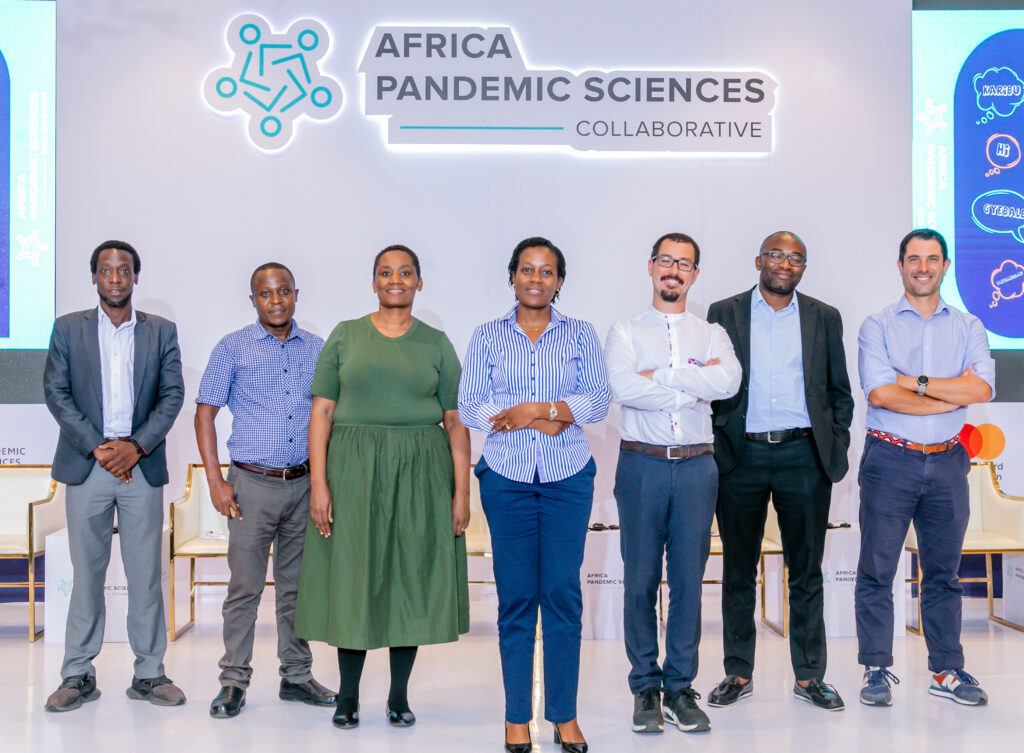
I have been a doctor for 20 years. Currently, I am leading a consortium supported by the Africa Pandemic Sciences Collaborative as the Principal Investigator, and I also serve as Assistant Clinical Head in the Department of Internal Medicine at Makerere University. My work involves collaboration across countries, capacity building, teaching and mentoring.
Q: What promise should society make to girls who dream of being scientists?
Make room for women – and consider everything they come with.
We want to be seen as scientists first. But in the background, there is more that we carry, and that should be acknowledged.
We need to speak up about our abilities. We need to negotiate better terms and conditions. We should not have to choose between career and family.
Why should we choose?
We can have both.
Story by: Alex Kandie and Emmanuel Kimaru

