Article
I turn numbers into decisions that shape lives
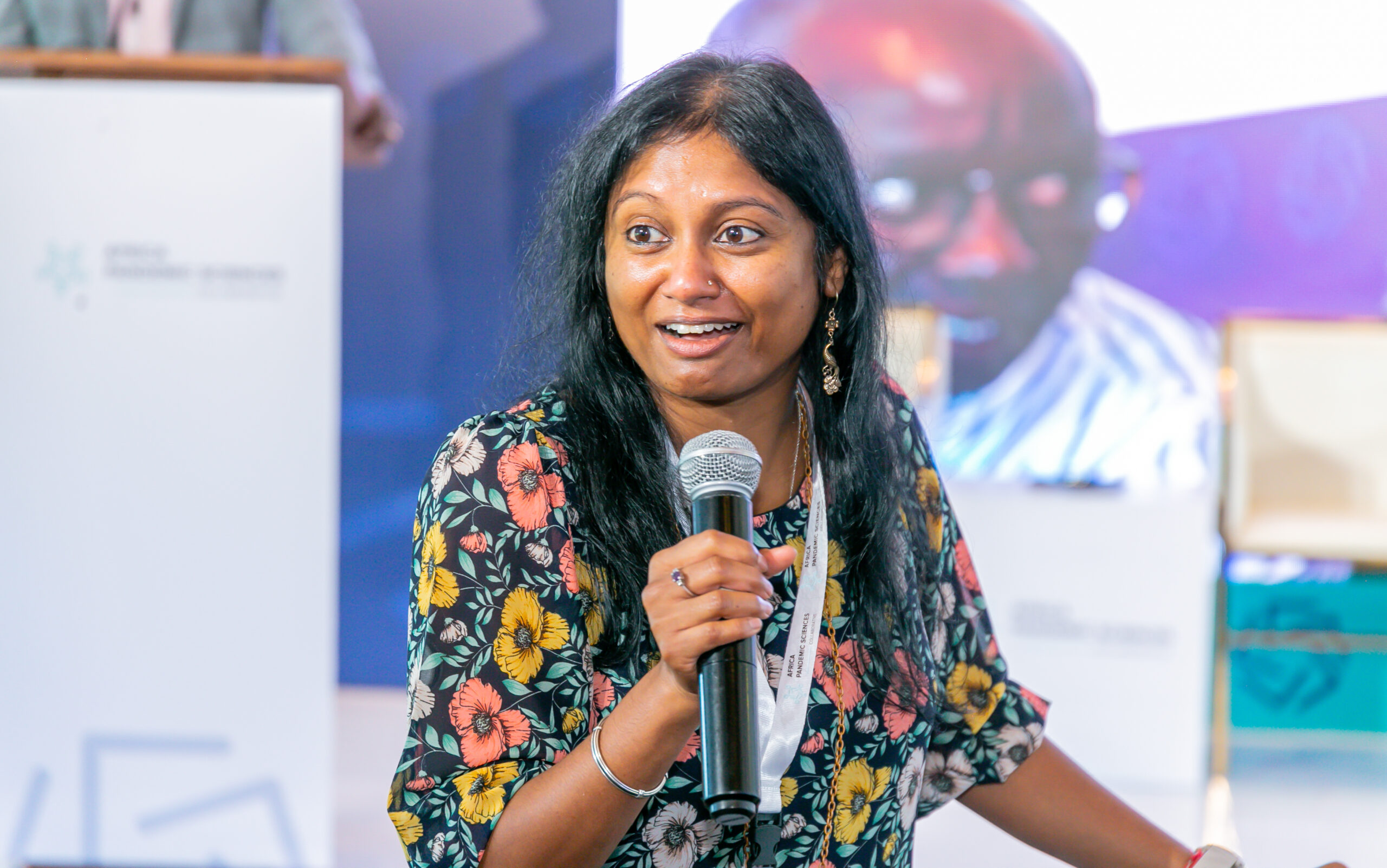
For many people, mathematics is associated with abstract concepts and rigid certainty. But for Professor Sheetal Silal, equations are tools for connecting data with decisions that affect people’s lives. Her journey to becoming a global leader in disease modelling was not linear, but shaped by important career decisions. From choosing not to pursue a corporate actuarial career to leading the World Health Organization Immunization and Vaccines Related Implementation Research Advisory Committee (IVIR-AC), Prof Sheetal has consistently chosen work that connects science with public purpose.
The importance of her work became particularly visible during the COVID-19 pandemic. While governments were trying to understand how the virus might spread, Prof Sheetal and her team worked for more than two years, often long hours, to provide the South African government with mathematical models that could support policy decisions during the crisis.
“I view my science almost as a vocation, as something beyond just the number—something that has greater purpose and gives my life meaning.”
Prof Sheetal Silal is a disease modeller, a Professor in the Department of Statistical Sciences at the University of Cape Town, and the Director of the Modelling and Simulation Hub, Africa — MASHA. She is also the chair of a WHO advisory committee, a principal investigator on multiple international research consortia, supervisor to 26 postgraduate students, and a professional dancer and sitar player. Her life seems less like a series of data points and more like a masterclass in tenacity.
She will tell you mathematics is a hobby. She will also tell you it saved her.
“I knew I would be very unhappy in a corporate job. I was brave enough to take matters into my own hands.”
Prof Sheetal grew up on the east coast of South Africa, in a farm town called Verulam, five generations after her ancestors arrived as Indian indentured labourers who were brought to work on sugarcane farms during the colonial period. She grew up during apartheid. In that context, her parents hoped she would pursue a stable career.
“Growing up during apartheid, your parents wanted you to take a safe career, one that would be guaranteed to provide you with a stable financial lifestyle. Actuarial science seemed like the obvious place to go.”
She did the degree. She was good at it. She was also bored.
“As much as it was mathematical in nature, it seemed a little pointless to me. Working in corporate, being in that sort of rigmarole. It was just a vicious cycle.”
What happened next was not dramatic in the way that pivotal moments usually are in the retelling. It was quiet, deliberate, and entirely hers.
“I didn’t tell my parents I had applied for a master’s degree. I didn’t even tell them I had a job interview. I applied for funding from the South African government, and only when I got the scholarship did I tell them: ‘Hey Mom and Dad, guess what? I’m doing my master’s.’”
They were not happy at first. She was the first person in her entire extended family to pursue a master’s degree. She remains the only one with a PhD.
“I don’t blame my parents for being nervous. It just sounded like I was being a student for longer to them, because they didn’t know any better. Now, of course, they have no regrets.”
In her master’s programme, Sheetal encountered a field called operations research — and it changed everything.
“It was the first time I learned how mathematics could be used to solve real problems: modelling diseases, optimising systems, supporting decision-making. Suddenly I could see that mathematics could be used to make the world a better place.”
The example that made this clear was a malaria model designed to help inform decisions about changing a drug where resistance had emerged.
“That was marvellous. I’m not a doctor. I’m a mathematician. But what I can do on a computer can help government make better decisions. That’s when I knew.”
“Every project we do is for a different government, for a different population, solving a different crisis.”
The clearest test of what that purpose meant came during the COVID-19 pandemic. MASHA was developing models for the South African government. The world was in a panic. Decisions needed to be made quickly.
“We were working almost 20 hours a day for a period of over two years without weekends — just working and working relentlessly because our work had meaning. It was supporting a nation. It was helping to make better decisions.”
What made MASHA’s contribution distinctive was not just speed, but scope. While many models were predicting case numbers and hospital admissions, nobody was adequately accounting for what lockdowns cost the people who could not afford them.
“In many African settings, people cannot work from home. If you are a construction worker or a seasonal farm worker, there is no working from home. During lockdowns, many large portions of our communities were without wages. And this had a big impact on unemployment and on the economy.”
The CLEAR-Africa Consortium, which Prof Sheetal leads as Principal Investigator, is building the next generation of models that integrate both epidemiological impact and macroeconomic consequences so that future governments are not forced to choose between health and livelihoods without understanding the true weight of that choice.
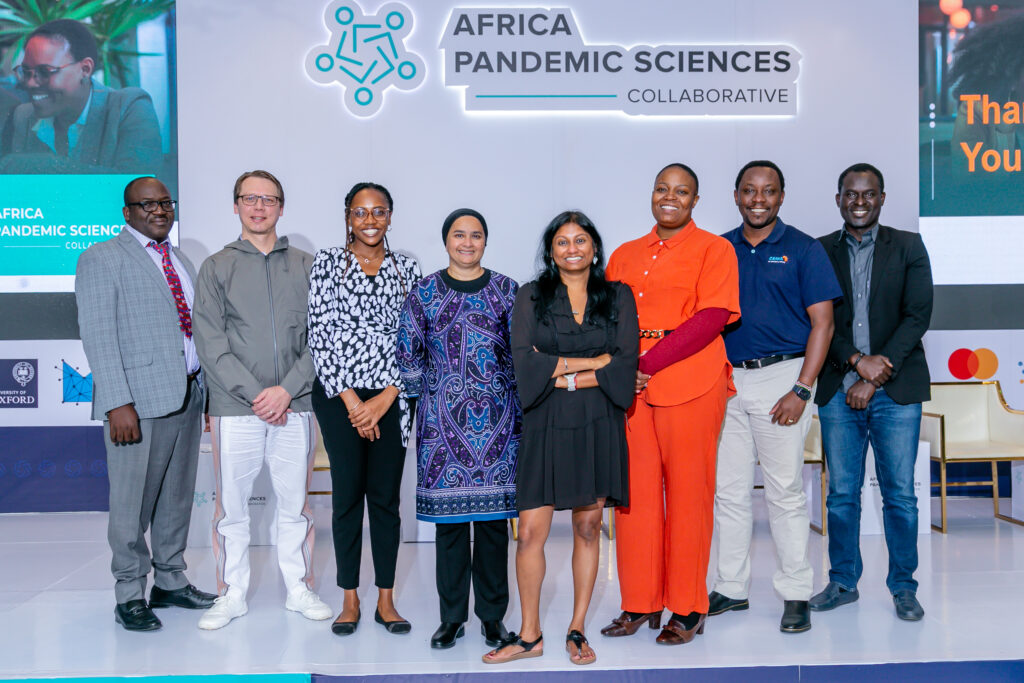
In September 2024, Prof Sheetal’s team submitted a model for diphtheria, tetanus and pertussis booster doses to the WHO’s IVIR-AC committee. It was the first submission from a Low- and Middle-Income Country (LMIC) institution in the committee’s five-year history.
“In the five years of my being on the committee, it was the first time I recall a submission from an LMIC. To me, that’s a pivotal moment. It signals a shift: that LMIC modelling groups are growing, and that our work can be of global relevance, developed exclusively on the African continent.”
Her reason for seeking out these leadership positions is deliberate and relational. As a junior modeller, she watched her own supervisor, Prof Lisa White, fight for funding, for Global South voices, for space at the table.
“She was carving a smoother road for me. Now it is my responsibility to pay that forward — to remove the unnecessary obstacles so that my students don’t have to fight the same battles. And when they get into this space, they will learn from my example and do the same for the generations that come.”
Under her supervision alone, she currently has 11 PhD and 15 master’s students. On the day of this interview, she was also preparing a candidate for a PhD interview the following morning, after hosting them as an intern following their master’s.
“For me personally, I have not experienced what I believe might be discrimination due to gender. A lot of that has to do with confidence, with fighting for my place. But that also means you enter a system and find your place on that system’s terms. That doesn’t necessarily mean the system was right to begin with.”
What she observes in others is different.
“I’ve seen brilliant women not being acknowledged and denied space. But the responsibility should not be placed entirely on these women to fight back. Systems should be designed so that anyone can access the space based on their scientific qualifications.”
She draws a sharp distinction between equality and equity — one she returns to often.
“Equity is the important term. There are wrongs that need to be righted. It is about achieving equity, maintaining the balance between those who have been historically disadvantaged and those who have not.”
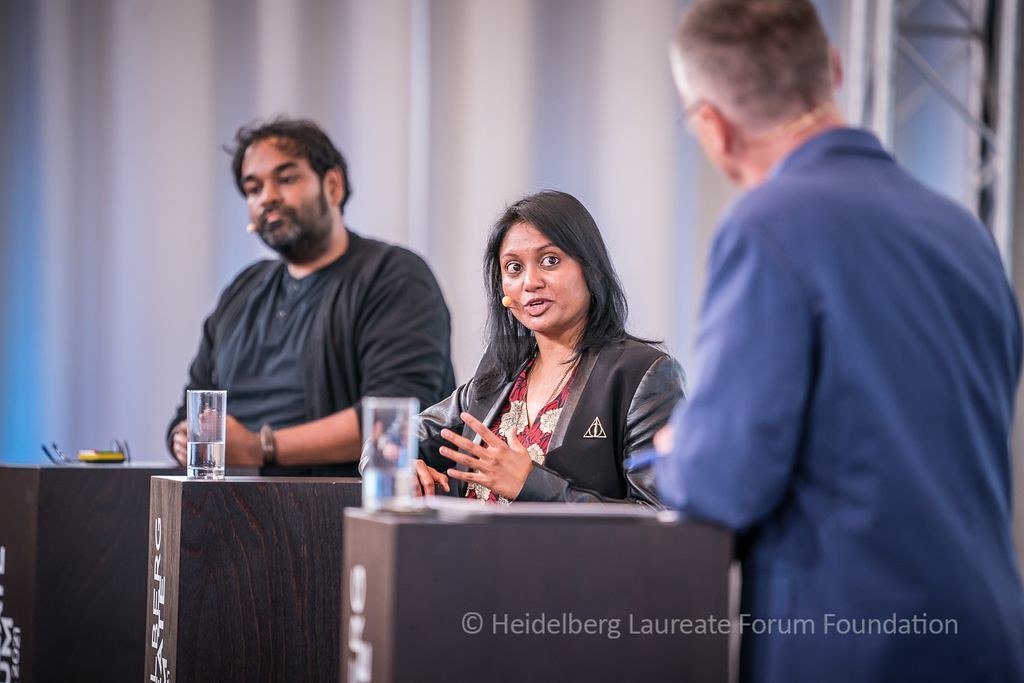
For young women entering science, she offers not a checklist but a framework.
“Have a purpose. Understand why you want to be in this field. Purpose and perseverance are the characteristics that will see you through.”
But above all else, she emphasizes one quality.
“Tenacity. Being able to fight for what you want. Look for solutions. Don’t be afraid to ask. Don’t be afraid to learn. Be humble, because we are always learning. And that’s how we become better.”
“As a mathematician alone, I will not know everything I need to know. Being able to work well with others, and respect what others know, is equally important to growing in your own field.”
When asked how she manages the demands of students, research leadership and international travel, Prof Sheetal answers simply.
“It’s about making space. Every portion of your life gets that space. I use time efficiently. And when I close my laptop, that’s it — it’s done. When I’m concentrating on relaxing, I’m just relaxing. When I’m at work, I’m at work.”
She bakes for her staff. She dances professionally. She plays the sitar. She will tell you these things are not in tension with the 20-hour COVID days or the WHO committee chairing. She will tell you it all comes together.
Her one wish for women in science on the continent, which also falls during International Women’s Month is clear.
“My wish is that we create a decision-making system where women, men, and all minority groups have a voice throughout the entire process — not just in making decisions, but in implementation. Not just in creating advice, but also as receivers of health. It’s a systemic approach.”
Women have an important role in delivering healthcare, shaping policy decisions and contributing scientific expertise.

