Article
SHARPER Project Features in Capacity Building Training for Early-Career Researchers at the University of Ibadan, Nigeria
The Strengthening Health Systems Capacity in Africa for Pandemic Equity and Responsiveness (SHARPER) Project featured in a capacity strengthening programme at the University of Ibadan (UI) for approximately 400 newly recruited lecturers. Organized by the Research Management Office (RMO) of the university, the programme was designed to support the professional development and integration of the Early-Career Researchers (ECR) into the university system. It is also a part of efforts to strengthen the institution’s human resource capacity and reinforce its commitment to fulfilling its vision to be a world class institution for academic excellence geared towards meeting societal needs.
To foster effective facilitator-participant interaction, the workshop was delivered to participants in two batches. While the first batch of participants were trained from 4th to 6th May, the second was held between 1st and 3rd June 2026. During these programmes, several key aspects of academic life and institutional practice were covered. The sessions focused on the social responsibilities of academics, the opportunities and challenges associated with scholarship, promotion guidelines, work-life balance, mentorship and career advancement strategies.
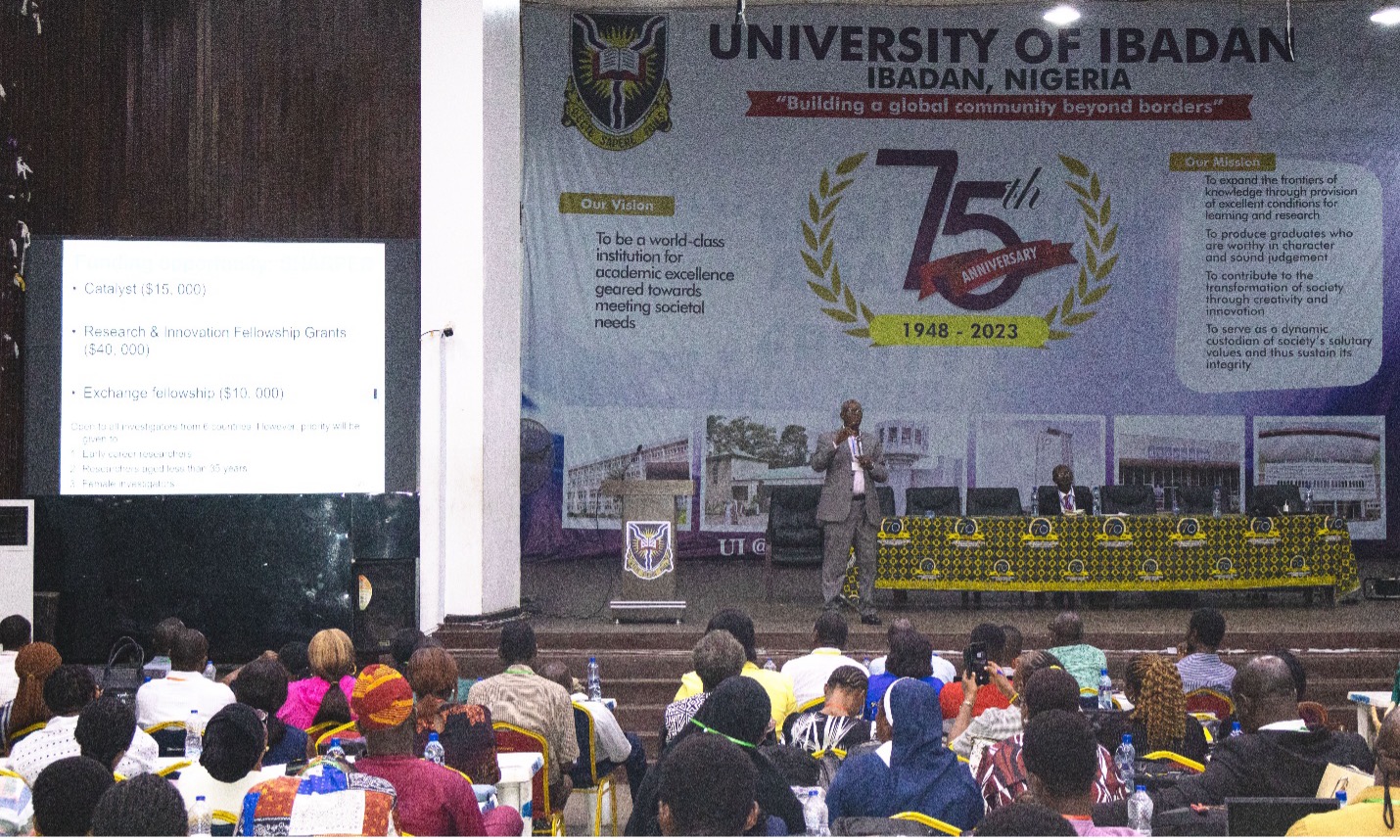
At the training, Prof. Ademola Ajuwon, the Principal Investigator of the SHARPER Project, delivered an insightful lecture on grant writing and research strategies. He provided participants with practical tips on how to search and win grants, developing competitive proposals, and maintaining ethical and professional standards in research.
Speaking on the importance of research grants in academic career development, Prof. Ajuwon introduced participants to the SHARPER Project and the opportunities it offers for ECR. He explained that the project is a six-year socio-behavioural science research initiative focused on strengthening health systems capacity, pandemic preparedness and responsiveness, research benefit-sharing, and the promotion of African values in research ethics.
He highlighted that the SHARPER Project would provide three categories of research support annually across its six partner institutions, namely the College of Medicine, University of Ibadan, Nigeria; University of Cape Town, South Africa; Tropical Institute of Community Health, Kenya; Afya na Haki, Uganda; Kamuzu University of Health Sciences, Malawi; and the Cameroon Bioethics Initiative, Cameroon. The University of Ibadan serves as the lead institution for the project.
According to Prof. Ajuwon, the project’s Research Innovation Grants will offer up to $40,000, while the Catalyst Awards will provide up to $15,000 in funding. In addition, the Exchange Fellowships valued at up to $10,000 will be available to support collaborative learning and research exposure across partner institutions. He encouraged the participants to monitor the project’s social media platforms, particularly Facebook and LinkedIn, for upcoming Calls for Applications (CFAs). He also emphasised the project’s commitment to promoting inclusivity and equity in research participation, noting that women and applicants under 35 would receive priority consideration during the selection process.
While specific thematic priorities will be detailed in future calls, Prof. Ajuwon explained that the project’s major research areas include pandemic preparedness and responsiveness, research benefit-sharing, and African-centred approaches to research ethics and governance.
The announcement was enthusiastically received by participants, many of whom described the initiative as a important opportunity to strengthen the capacity of ECR expand access to funding opportunities, and improve female representation in research and global health discourse.
SHARPER is supported by the Africa Pandemic Sciences Collaborative. The Collaborative seeks to mentor, nurture, and equip an emerging generation of young African scientists and researchers to address current and future health challenges, contribute to strengthening the continent’s health ecosystem and pandemic preparedness and response capabilities, and to create pathways to dignified and fulfilling careers in pandemic sciences. The Collaborative is a multi-year partnership between the Science for Africa Foundation (SFA Foundation), the Pandemic Sciences Institute (PSI) at the University of Oxford, and the Mastercard Foundation.
As the training session drew to a close, participants engaged actively in discussions, asking questions, seeking clarification, and sharing reflections on the opportunities presented through the SHARPER Project. The interactive session provided Prof. Ademola Ajuwon with an opportunity to further engage the early-career academics on research development, grant competitiveness, and the broader vision of strengthening African-led research systems.
Going forward, the SHARPER Project remains committed to sustained stakeholder engagement through various communication and knowledge-sharing platforms. These efforts are aimed at ensuring wider visibility for the project, deepening awareness of its objectives, and advancing conversations around research benefit-sharing, pandemic preparedness and responsiveness, and ethical, African-centred approaches to research and global health governance.
Written by Adams Adeshola

