Article
Four EPSILON Consortia Launch at UCT to Strengthen Pandemic Preparedness in Africa
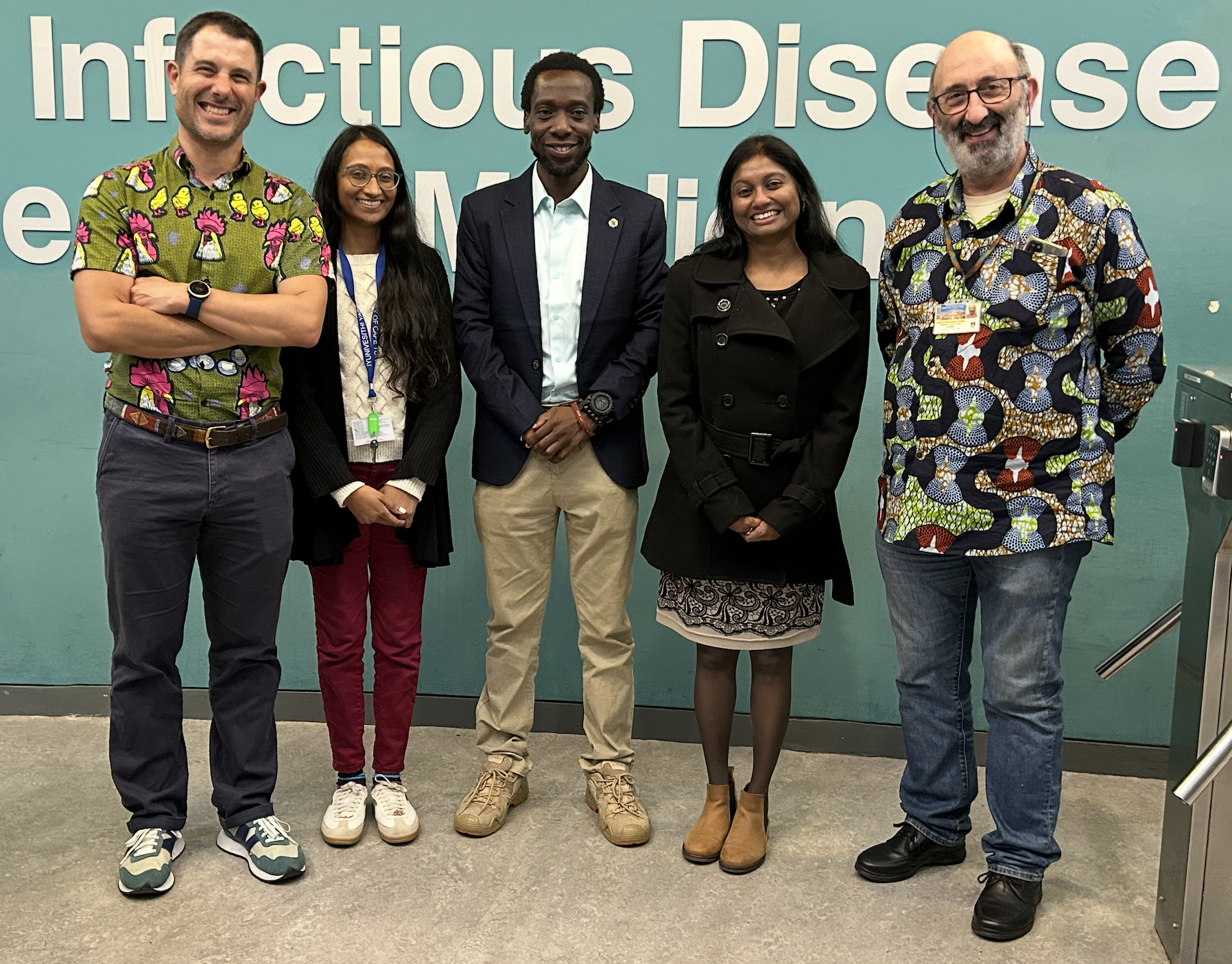
On Thursday, 21 May, the Institute of Infectious Disease and Molecular Medicine (IDM) at the University of Cape Town (UCT), South Africa, hosted the soft launch of four consortia funded by the Africa Pandemic Sciences Collaborative through a partnership between the Science for Africa Foundation, the University of Oxford’s Pandemic Sciences Institute, and Mastercard Foundation. Beyond supporting research, this collaboration also invests in strengthening the pandemic sciences ecosystem across the continent.
In total, seven Epidemic and Pandemic Sciences Innovation and Leadership Networks (EPSILONs) have been funded, each led by African scientists and designed to create a network of excellence in epidemic and pandemic sciences. The launch focused on the four consortia in which UCT is either the lead or a partner institution, spanning 11 African countries: Cameroon, Democratic Republic of the Congo (DRC), Ghana, Kenya, Malawi, Nigeria, Senegal, Tanzania, Uganda, Zimbabwe, and South Africa.
Opening remarks were delivered by Professor Wendy Burgers, Deputy Director of IDM, who reflected on the current lack of outbreak preparedness and the unequal global research landscape. Referring to discussions at the World Health Assembly and ongoing outbreaks such as Ebola in the DRC, she highlighted the need for African-led pandemic science and stronger collaboration across the continent.
Christina Pather from the Research Support Enterprise described the launch as “a step towards a stronger, more equitable and more resilient African research ecosystem”, while celebrating UCT’s participation in four of the seven funded projects and the interdisciplinary collaboration this represents.
The first consortium presented was the Consortium for Leadership of Epidemiological-economic Analysis for epidemic Response in Africa (CLEAR-Africa), led by Professor Sheetal Silal. CLEAR-Africa aims to strengthen preparedness for future pandemics by developing models that consider not only disease transmission and health outcomes, but also the social and economic consequences of public health responses. The consortium seeks to address the current modelling skills gap by training African researchers to lead and adapt epidemiological-economic models locally, ensuring that future outbreak responses are informed by both health and economic realities.
Associate Professor Jinal Bhiman then presented Surveillance Platforms and ImmunoLOgy for zoonotic Viruses with pandemic potential in Africa (SPIL-OVA), a consortium working at the human-animal interface to better understand zoonotic threats. SPIL-OVA focuses on identifying viruses with spillover potential circulating in African bat populations, recognised reservoirs of several emerging infections. Through multiple research work packages, the consortium aims to build knowledge about animal viral diversity, strengthen surveillance systems and support diverse leadership and scientific expertise across the continent.
Strengthening Health systems capacity in Africa for Pandemic Equity and Responsiveness (SHARPER) was presented by Professor Leslie London, representing one of the consortium partners. SHARPER seeks to transform how research is conducted and used in Africa by analysing the current policy and research landscape and identifying opportunities for change. The consortium will develop new tools, courses and academic outputs while placing equity, African values and human rights at the centre of pandemic preparedness and response, so as to ensure health research benefits populations and not only participants.
The final consortium presented was Advancing Capacity for Early Phase Trials for Pandemics and Epidemics in Africa (ACCEPT-Africa), presented by Dr Daniel Kiiza and Professor Paolo Denti. ACCEPT-Africa aims to strengthen early-phase clinical trial infrastructure across the continent, enabling trials, protocol development, and pharmacokinetic analysis to be conducted locally. The consortium also focuses on training researchers and laboratory teams so that future clinical research can be led within Africa and better reflect the populations it seeks to serve.
In their closing remarks, Angie Kerubo Mugisha and Dr Linda Murungi from the Africa Pandemic Sciences Collaborative, highlighted the importance of collaboration and thanked the principal investigators for their commitment to strengthening preparedness for future epidemics and pandemics. They reminded the audience that scientific knowledge should not remain within institutions but should reach communities and create impact at individual, institutional and systemic levels.
The launch concluded with a networking reception, bringing together students, researchers, partners, and consortium members. Earlier in the event, Professor Burgers reminded the audience that “Africa doesn’t lack talent; there has been a structural gap that has prevented the continent from working together.” The EPSILON programme seeks to address this gap by strengthening collaboration, leadership and scientific excellence across Africa.
Written by Elisabet Marti Coma-Cros and appeared HERE originally.

