Article
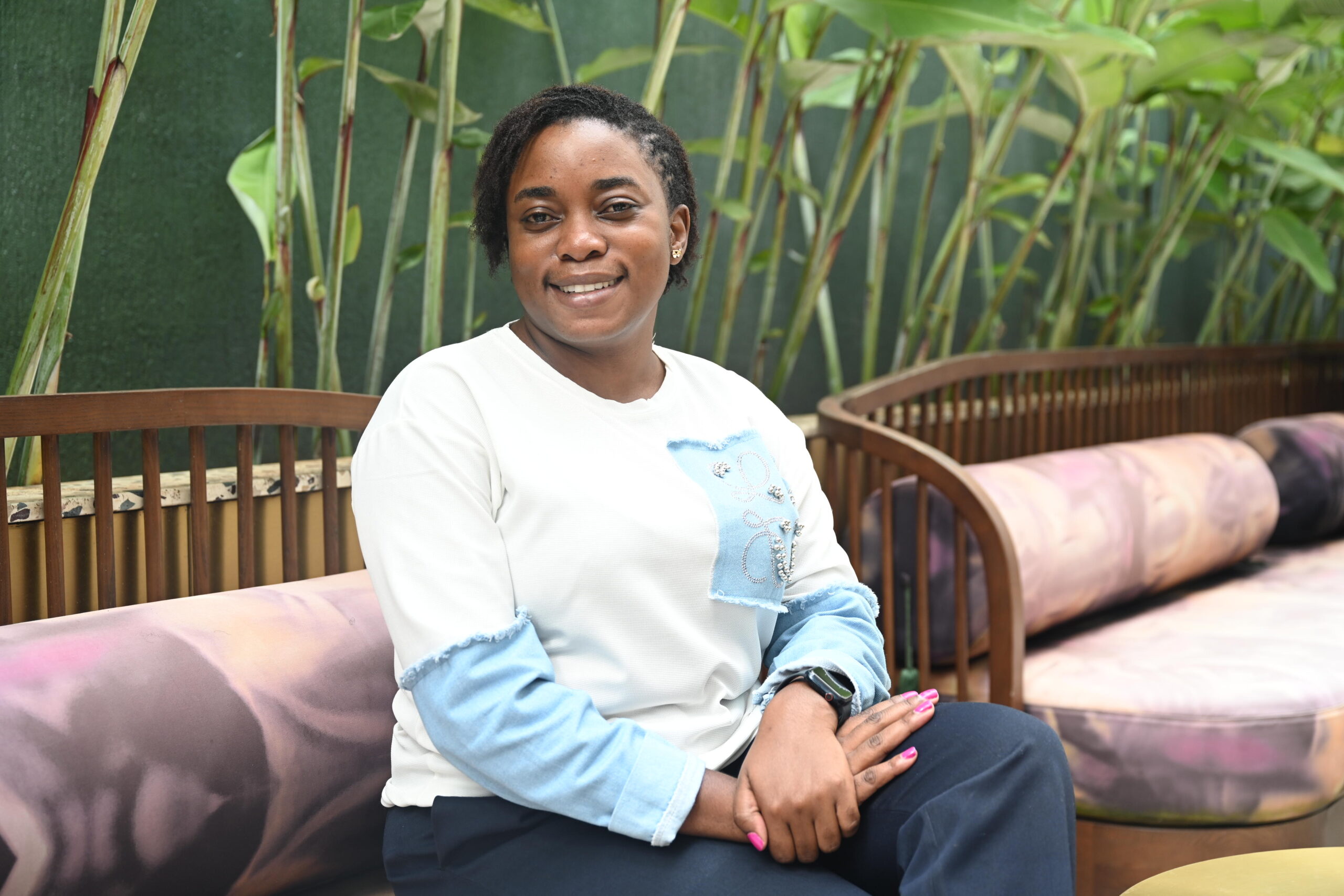
When she spoke, people listened: Meet Vimbai Mukwekwezeke, One of the Newest Member of the Policy Advisory Stakeholders Group (PAS-G)
Some people spend years searching for their voice.
Vimbai realised she had already found hers.
Whenever she spoke, people listened.
It was something she began to notice in meetings with colleagues, during technical discussions, and later, in the policy conversations that emerged throughout the COVID-19 pandemic. Her ideas resonated. Her arguments carried weight. Increasingly, she found herself helping bridge the gap between research and the decisions that shape public health.
What began as a quiet observation soon became a calling.
“When I’m talking about policy,” she says, “it’s something that I don’t have to think about. It just comes and starts making sense.”
Recently, Vimbai joined the Africa Pandemic Sciences Collaborative’s Policy Advisory Stakeholders Group (PAS-G) as one of its newest and youngest members, bringing expertise in research governance, infectious disease modelling, and evidence-informed policymaking. More importantly, she brings a conviction that good science only changes lives when the right people are prepared to listen.
Vimbai’s journey into policy was anything but conventional.
“My first degree was in Computer Information Systems,” she explains. “Then I moved into monitoring and evaluation, information systems management, bioethics, and infectious disease modelling. I borrowed from a lot of different disciplines to get where I am.”
Rather than following a single career path, she built one across disciplines, combining technical knowledge with an increasing appreciation for how research influences public policy.
Today, she serves as a Research Information and Compliance Officer at the Medical Research Council of Zimbabwe, working at the intersection of research governance, evidence generation and policy translation.
The COVID-19 pandemic became a defining moment in Vimbai’s career.
As Zimbabwe responded to the crisis, researchers began connecting through virtual discussions that would eventually evolve into the Zimbabwe Infectious Diseases Modelling Consortium, a nationally recognised platform providing evidence and technical guidance to government.
Vimbai was part of that journey from the beginning.
“Some of our leaders became special advisers to the President, and we would feed them with information that was passed on to the Minister,” she recalls.
For the first time, she witnessed scientific evidence moving beyond research papers and into the rooms where national decisions were being made.
That experience transformed the way she viewed policy.
“When research comes in and we get dissemination results and study reports, some of those outcomes are translated into policy,” she says. “That’s how I became involved in this work.”
Today, she sees policy not as a collection of documents or procedures, but as the mechanism through which research creates real-world impact.
For Vimbai, good policy begins with good science.
“Good research results,” she says without hesitation, “means that the groundwork has been done well and whatever is translated into policy has been thoroughly examined.”
But rigorous evidence alone does not guarantee change.
“We live in a diversified and highly political world,” she says. “We need to push harder for policies to be adopted.”
Her work has taught her that scientific evidence must compete for attention in complex political environments. Generating knowledge is only part of the challenge. Ensuring that knowledge informs decision-making is equally important.
As a young African woman working at the science-policy interface, Vimbai understands what it means to fight for your voice to be heard.
“Women are not yet enough in these spaces,” she says.
She believes greater representation is essential – not simply because women deserve a seat at the table, but because better policymaking depends on diverse perspectives.
“I wish to be in government one day, perhaps in a ministerial position or as a permanent secretary,” she says. “If you look around right now, how many women are in policymaking roles? Very few. The space is not as welcoming as it should be.”
She points to the barriers that continue to limit women’s participation in policymaking across the continent.
“The doors are not open enough for us. You want to be heard, but often the doors are closed.”
Yet she also believes the landscape is beginning to change.
“Women now have the zeal to participate,” she says. “Despite not being heard before, we now have the confidence to say: ‘You have to hear us. Involve us.'”
One of the contributions she hopes to make through the Policy Advisory Stakeholders Group is helping amplify the voices of young researchers and creating more opportunities for women to participate in policy conversations.
“When you can talk in a small room with influential people, there is potential for your voice to be amplified into other bigger rooms,” she says. “It becomes a door. It becomes an opportunity.”

Vimbai with SIB Paul Marie Ange Auguste Anselme, the two newest members of the PAS-G
Joining the Collaborative’s Policy Advisory Stakeholders Group marks an important new chapter in Vimbai’s journey.
“The Collaborative’s Policy Advisory Stakeholder’s Group (PAS-G) has moved my work beyond the national level,” she says.
She hopes to contribute to a growing community of scientists and policymakers committed to strengthening evidence-informed decision-making across Africa while continuing to advocate for more efficient policy processes.
“If somebody comes up with a policy, it means a lot of work has already gone into it,” she says. “We live in a fast-moving world. It doesn’t make sense for highly qualified experts to bring forward a recommendation and then have it take an unnecessarily long time to move forward.”
Looking ahead, her ambition is clear: to help build systems where scientific evidence moves more quickly into action and where more young people and women help shape the decisions that affect millions of lives.
“What can stop me right now?” she reflects. “Nothing. I can see where I’m going. I can see what I really want to do.”
Years ago, Vimbai noticed something simple: whenever she spoke, people listened.
Today, she is using that voice for something much bigger than herself – helping ensure that when science speaks, policymakers listen too.

