Article
MosEPIC consortium launches innovative surveillance programme to track emerging pathogens across Africa
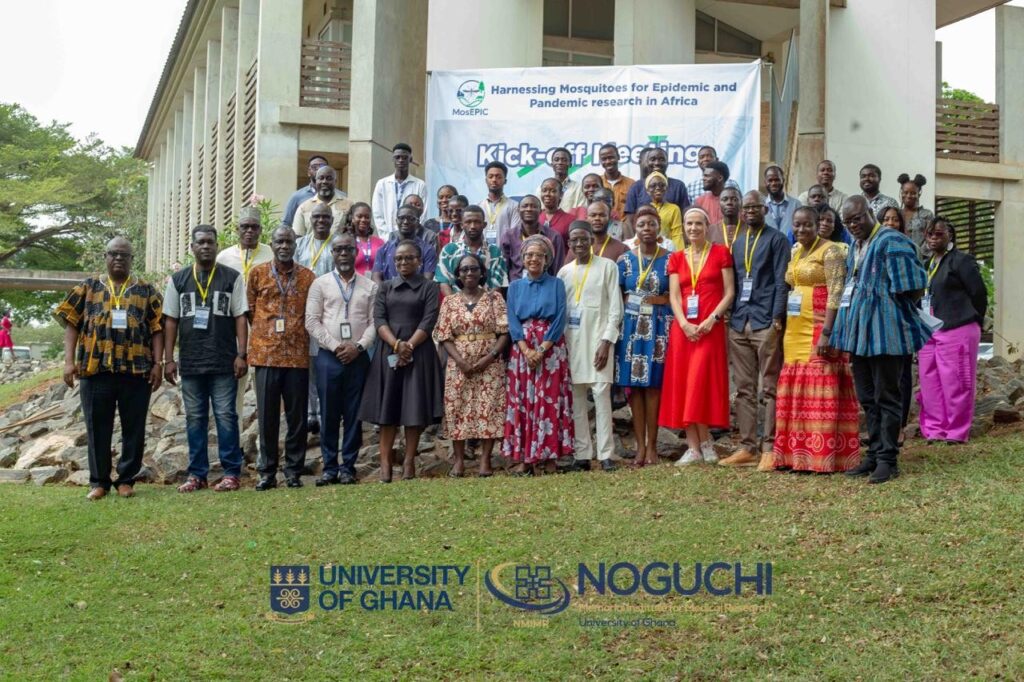
Accra, Ghana | 27-29 October 2025
The MosEPIC consortium has officially launched its programme to strengthen epidemic surveillance across Africa by monitoring how pathogens move between humans, animals, and the environment. The initiative introduces a novel approach that uses mosquitoes as natural samplers to detect exposure to a wide range of pathogens across the “urban–rural–forest continuum,” where human activity is rapidly reshaping ecosystems.
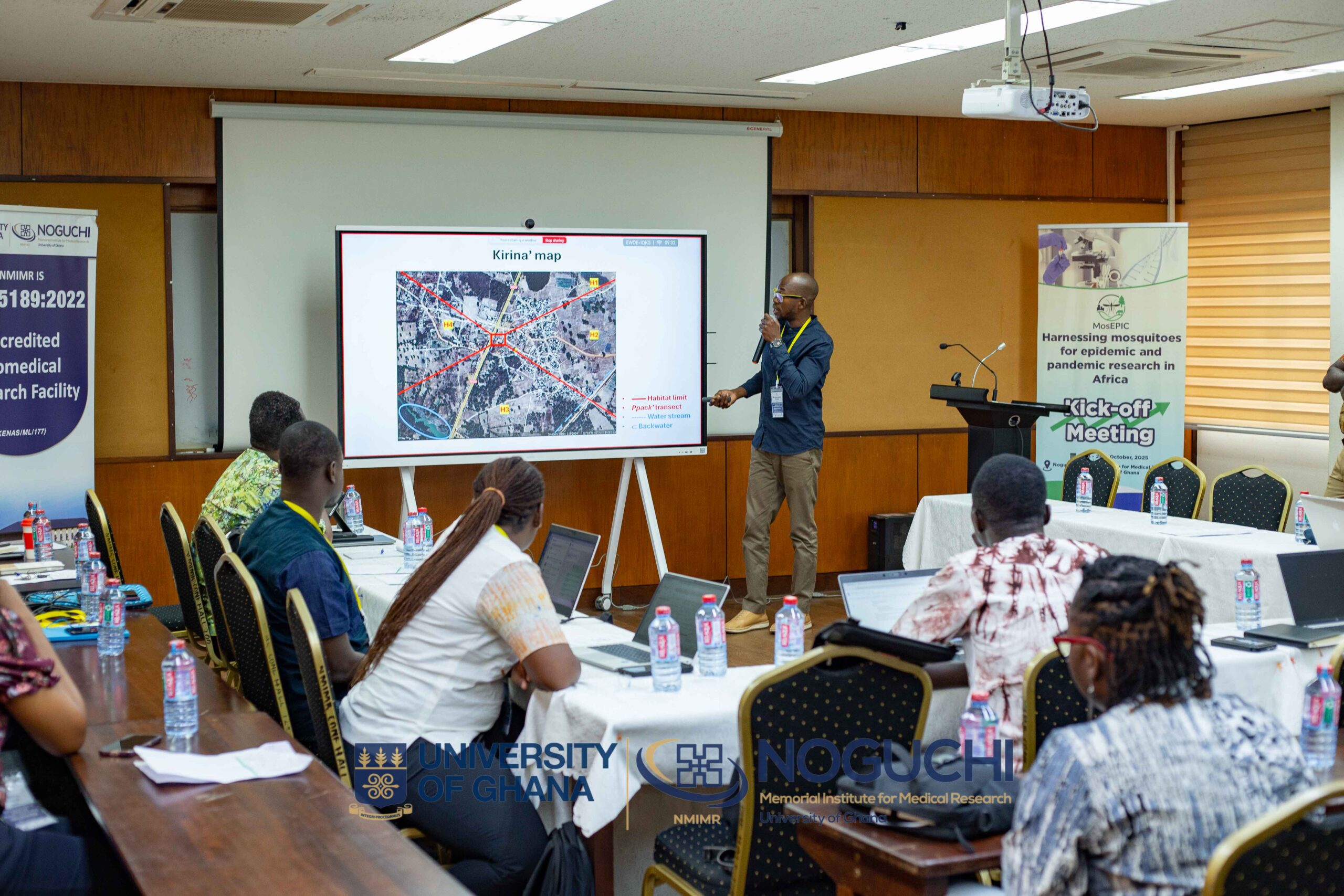
The project focuses on three interconnected dimensions—mosquito species, vertebrate hosts, and pathogens—to better understand how environmental change influences connectivity and zoonotic disease risk. Using advanced serological and metagenomic tools, the team will analyse mosquito bloodmeals to detect past exposure to around 20 pathogens with epidemic potential, including Ebola, Lassa, chikungunya, and dengue. Additional fieldwork will examine hotspots such as wildlife reserves, bat caves, and live-animal markets, while high-altitude sampling of windborne mosquitoes will help track long-distance movement of vectors and pathogens.
Speaking at the inception meeting, the consortium lead Dr Abdoulaye Diabaté, highlighted the transformative potential of the approach: “By harnessing mosquitoes as bio-samplers for epidemic surveillance, we will be able to potentially detect up to 20 pathogens. Our research findings will tangibly enable us to strengthen early-warning mechanisms and help authorities take appropriate measures to counter epidemic threats.”
Dr Hamidou Maiga, a Project Officer, underscored the programme’s long-term value: “This project will bring a new generation of young and well-prepared scientists to tackle emerging and re-emerging pathogens in West Africa.”
On the importance of community engagement, Dr Léa Paré emphasised: “We must develop adapted communication tools and translate our key messages into local languages to establish a constructive dialogue. This process is crucial for strengthening community engagement and ensuring a complete understanding of MosEPIC objectives.”
Reflecting on the programme’s capacity-building goals, Dr Nouhoun Traoré, Postdoctoral Scientist, noted: “The MosEPIC project presents a considerable opportunity to mitigate mosquito-borne public health risks. Besides validating a surveillance system, it will build capacity across participating nations by training students and postdoctoral researchers in the early detection of potential vector-borne diseases.”
The consortium begins its work with a shared commitment to generate robust baseline data, improve early-warning systems, and support strategies that can help prevent and mitigate future epidemics across the continent.