Article
PREPARE network launches to strengthen Africa’s readiness for emerging viral threats
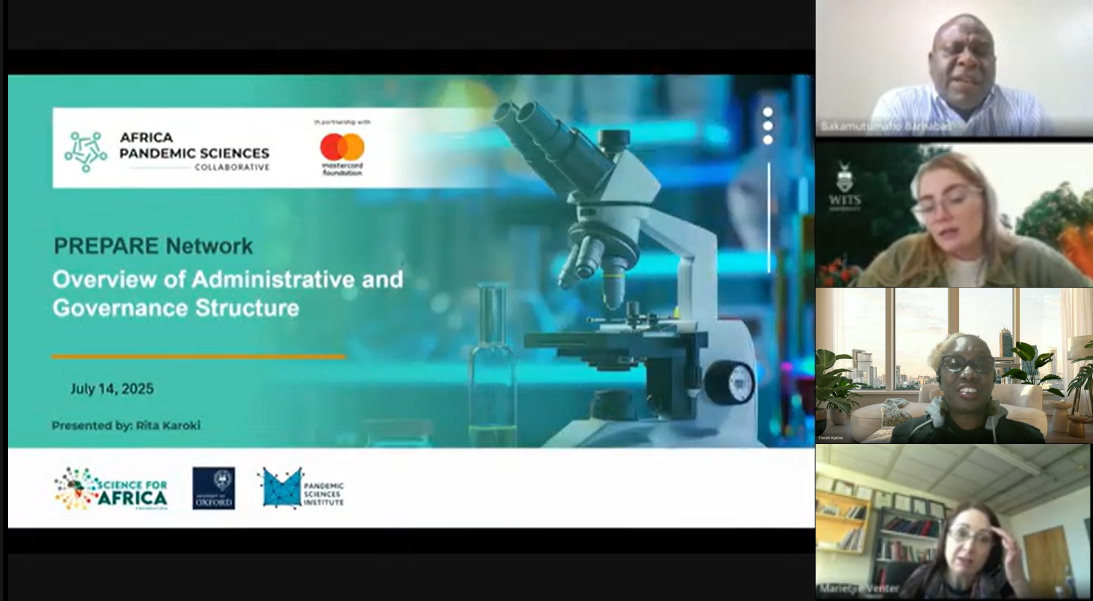
The Prevention and Response to Emerging Viruses with Pandemic Potential in Africa (PREPARE) Network officially launched with a virtual inception meeting held on 14 July 2025, bringing together project teams from Kenya, South Africa, Uganda, Côte d’Ivoire, and the Democratic Republic of the Congo. The meeting marked the start of a five-year programme aimed at strengthening Africa’s capacity to detect, prevent, and respond to emerging and re-emerging viral threats.
Led administratively by the Africa Population and Health Research Center (APHRC) and scientifically by Wits University, the inception meeting focused on introducing country teams, aligning on governance and administrative processes, and outlining the programme’s scientific and capacity-strengthening priorities. Partners endorsed a governance structure that includes a Management Committee and an independent Scientific Advisory Board to guide scientific quality and oversee capacity-building awards.
PREPARE is establishing key regional nodes across South, East, and West Africa, with a focus on clinical disease surveillance, multi-pathogen diagnostics, genomics and pathogen discovery, prototype vaccine development, and capacity strengthening. Clinical sites will use retrospectively collected samples alongside expanded prospective syndromic surveillance in humans, animals, and the environment to detect both known and unknown pathogens.
Capacity strengthening is a core pillar of the programme. Partners reviewed planned investments, including PhD positions, fellowships, exchange awards, and catalyst grants, alongside discussions on monitoring, evaluation, and communications. Country teams also shared existing surveillance platforms and laboratory capabilities, confirming strong foundations for implementing the programme’s One Health approach.
The meeting concluded with agreement on immediate next steps, including finalising contracts, constituting the Scientific Advisory Board, onboarding research staff once funds are released, and establishing regular check-ins to support coordinated implementation across the network.

