When the Africa Pandemic Sciences Collaborative members convened for the first time last year, we shared a common vision of advancing pandemic sciences across the continent. Our EPSILONs, the seven consortia of research excellence we are supporting, had just been formed; we had ideas and plans, but several of the people now sharing our journey weren’t even with us yet.
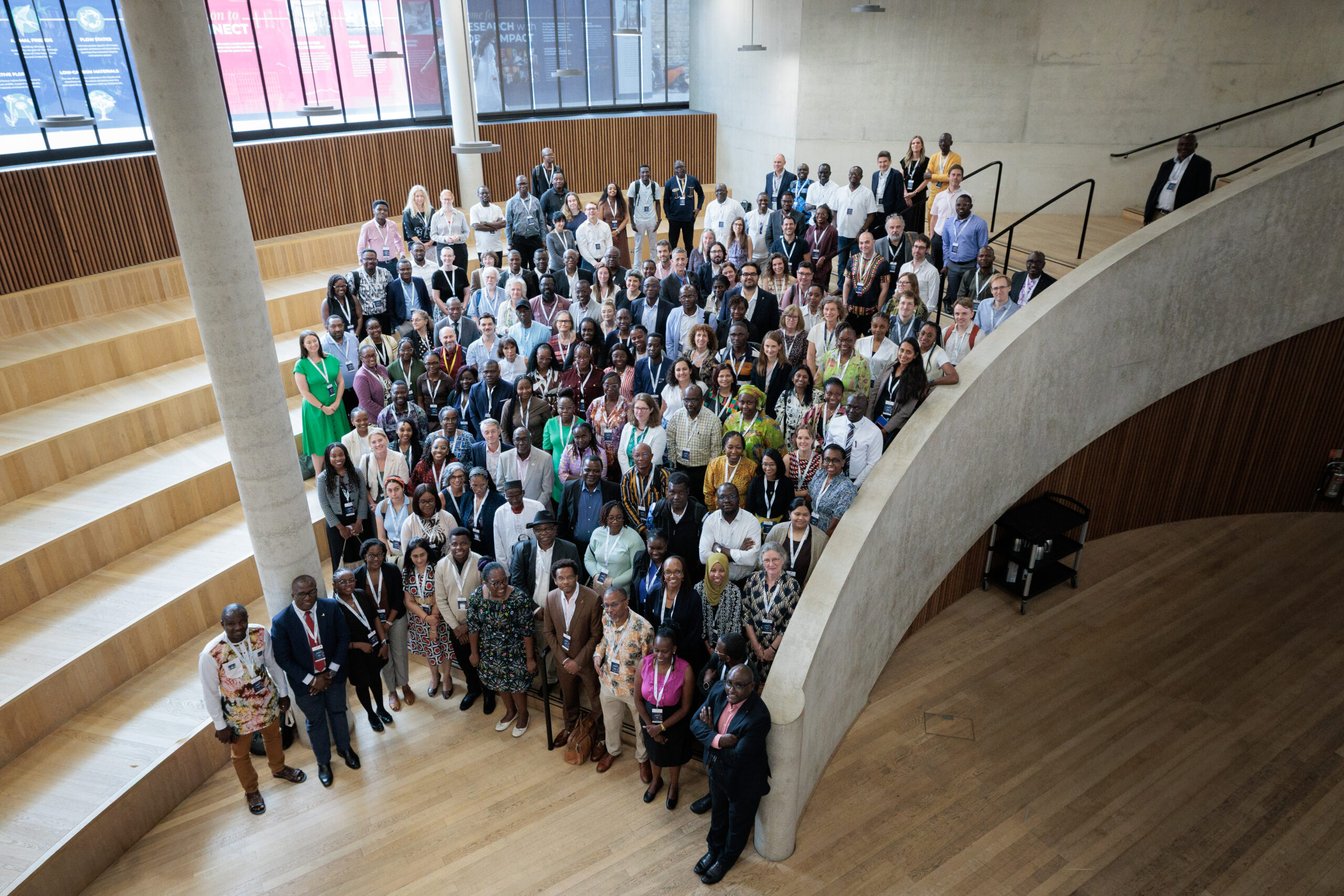
At our second Annual Meeting, hosted in August in Oxford, we fully realised how much the Collaborative has grown in the meantime, both in size and in ambition. From vaccinology and virology to clinical trials and surveillance, and from modelling to ethics and policy – the Collaborative’s research is already contributing to real-world epidemic preparedness and response, including to the Bundibugyo Ebolavirus outbreak.
During the Annual Meeting, research updates were often shared by our early-career scientists, who spoke with confidence and authority in representation of a growing cohort of up-and-comingscientists and professionals. This is what the Collaborative aims to do – nurture the next generation of African scientists and enable them to strengthen pandemic resilience in Africa and worldwide.
The Collaborative, however, is more than a network of researchers. It’s the technicians who support research activities; the finance professionals who help run projects smoothly, sustainably and compliantly; the programme teams who make sure that lasting change can be delivered. It’s the MEAL specialists who track impact and ensure accountability; the communications professionals who mobilise vital information; and the policy teams who help transform research into effective solutions.
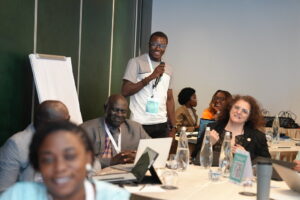
With these colleagues and many more – from our partner institutions, our EPSILONs and our broader network – we spent five days constantly learning from each other. Meetings like these consolidaterelationships and increase mutual trust, leading to better collaborations that are informed by different perspectives and expertise.
We don’t simply want our researchers to succeed. We want our institutions to emerge more robust and resilient, helping create a solid ecosystem where one’s strength is everybody’s strength. Where clear pipelines to policy and practice exist, allowing our work to improve the lives of our people.
That’s how, together, we will nurture and equip an emerging generation of young African scientists to tackle epidemic and pandemic threats – today and in the future.
Some people spend years searching for their voice.
Vimbai realised she had already found hers.
Whenever she spoke, people listened.
It was something she began to notice in meetings with colleagues, during technical discussions, and later, in the policy conversations that emerged throughout the COVID-19 pandemic. Her ideas resonated. Her arguments carried weight. Increasingly, she found herself helping bridge the gap between research and the decisions that shape public health.
What began as a quiet observation soon became a calling.
“When I’m talking about policy,” she says, “it’s something that I don’t have to think about. It just comes and starts making sense.”
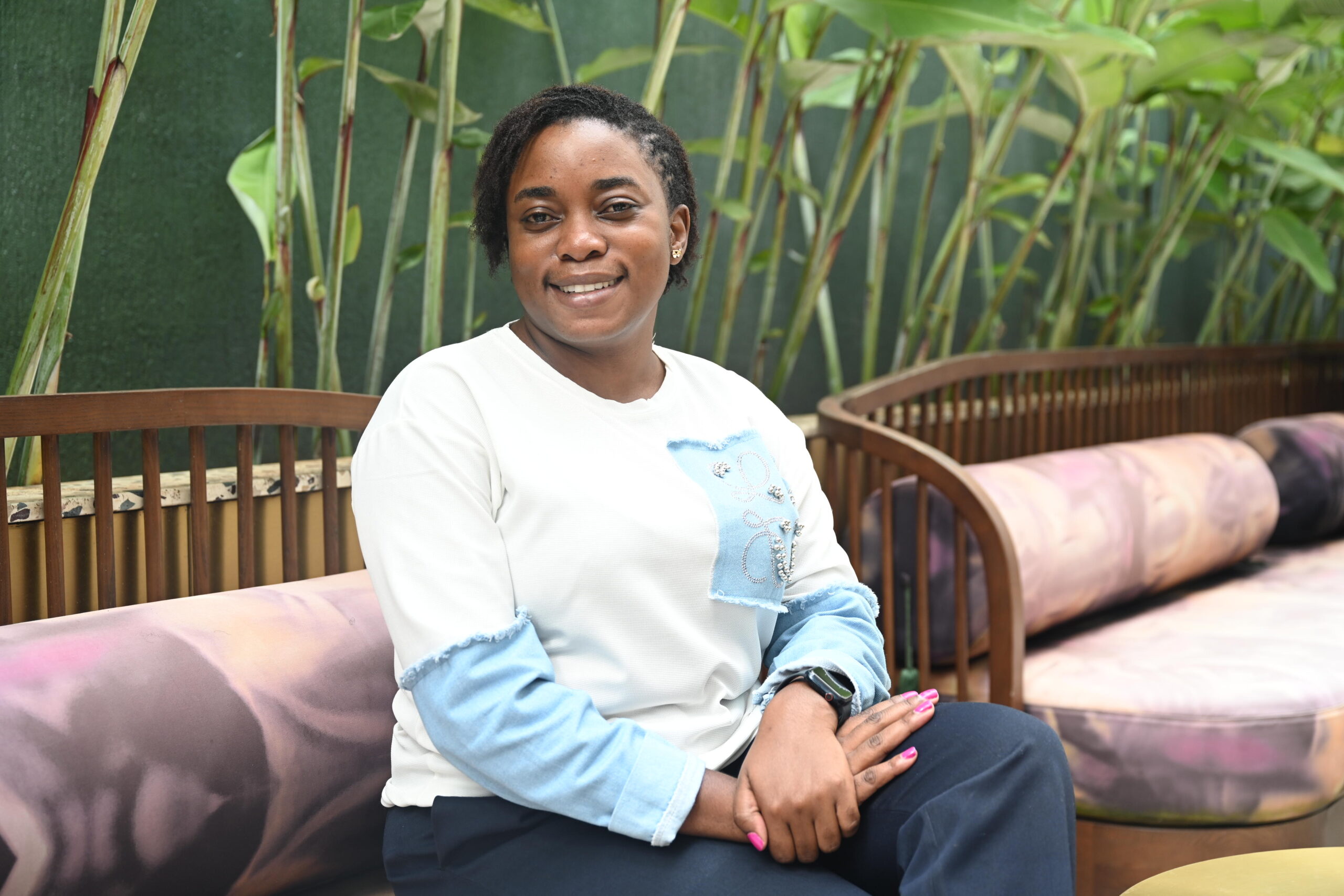
Recently, Vimbai joined the Africa Pandemic Sciences Collaborative’s Policy Advisory Stakeholders Group (PAS-G) as one of its newest and youngest members, bringing expertise in research governance, infectious disease modelling, and evidence-informed policymaking. More importantly, she brings a conviction that good science only changes lives when the right people are prepared to listen.
Finding Her Path
Vimbai’s journey into policy was anything but conventional.
“My first degree was in Computer Information Systems,” she explains. “Then I moved into monitoring and evaluation, information systems management, bioethics, and infectious disease modelling. I borrowed from a lot of different disciplines to get where I am.”
Rather than following a single career path, she built one across disciplines, combining technical knowledge with an increasing appreciation for how research influences public policy.
Today, she serves as a Research Information and Compliance Officer at the Medical Research Council of Zimbabwe, working at the intersection of research governance, evidence generation and policy translation.
When Research Found Its Voice
The COVID-19 pandemic became a defining moment in Vimbai’s career.
As Zimbabwe responded to the crisis, researchers began connecting through virtual discussions that would eventually evolve into the Zimbabwe Infectious Diseases Modelling Consortium, a nationally recognised platform providing evidence and technical guidance to government.
Vimbai was part of that journey from the beginning.
“Some of our leaders became special advisers to the President, and we would feed them with information that was passed on to the Minister,” she recalls.
For the first time, she witnessed scientific evidence moving beyond research papers and into the rooms where national decisions were being made.
That experience transformed the way she viewed policy.
“When research comes in and we get dissemination results and study reports, some of those outcomes are translated into policy,” she says. “That’s how I became involved in this work.”
Today, she sees policy not as a collection of documents or procedures, but as the mechanism through which research creates real-world impact.
Making Evidence Matter
For Vimbai, good policy begins with good science.
“Good research results,” she says without hesitation, “means that the groundwork has been done well and whatever is translated into policy has been thoroughly examined.”
But rigorous evidence alone does not guarantee change.
“We live in a diversified and highly political world,” she says. “We need to push harder for policies to be adopted.”
Her work has taught her that scientific evidence must compete for attention in complex political environments. Generating knowledge is only part of the challenge. Ensuring that knowledge informs decision-making is equally important.
Making Space at the Table
As a young African woman working at the science-policy interface, Vimbai understands what it means to fight for your voice to be heard.
“Women are not yet enough in these spaces,” she says.
She believes greater representation is essential – not simply because women deserve a seat at the table, but because better policymaking depends on diverse perspectives.
“I wish to be in government one day, perhaps in a ministerial position or as a permanent secretary,” she says. “If you look around right now, how many women are in policymaking roles? Very few. The space is not as welcoming as it should be.”
She points to the barriers that continue to limit women’s participation in policymaking across the continent.
“The doors are not open enough for us. You want to be heard, but often the doors are closed.”
Yet she also believes the landscape is beginning to change.
“Women now have the zeal to participate,” she says. “Despite not being heard before, we now have the confidence to say: ‘You have to hear us. Involve us.'”
One of the contributions she hopes to make through the Policy Advisory Stakeholders Group is helping amplify the voices of young researchers and creating more opportunities for women to participate in policy conversations.
“When you can talk in a small room with influential people, there is potential for your voice to be amplified into other bigger rooms,” she says. “It becomes a door. It becomes an opportunity.”
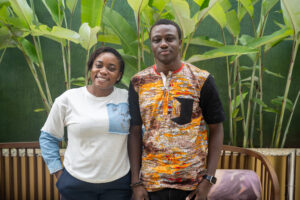
Vimbai with SIB Paul Marie Ange Auguste Anselme, the two newest members of the PAS-G
Beyond Zimbabwe
Joining the Collaborative’s Policy Advisory Stakeholders Group marks an important new chapter in Vimbai’s journey.
“The Collaborative’s Policy Advisory Stakeholder’s Group (PAS-G) has moved my work beyond the national level,” she says.
She hopes to contribute to a growing community of scientists and policymakers committed to strengthening evidence-informed decision-making across Africa while continuing to advocate for more efficient policy processes.
“If somebody comes up with a policy, it means a lot of work has already gone into it,” she says. “We live in a fast-moving world. It doesn’t make sense for highly qualified experts to bring forward a recommendation and then have it take an unnecessarily long time to move forward.”
Looking ahead, her ambition is clear: to help build systems where scientific evidence moves more quickly into action and where more young people and women help shape the decisions that affect millions of lives.
“What can stop me right now?” she reflects. “Nothing. I can see where I’m going. I can see what I really want to do.”
Years ago, Vimbai noticed something simple: whenever she spoke, people listened.
Today, she is using that voice for something much bigger than herself – helping ensure that when science speaks, policymakers listen too.
A decision about where limited resources should go. Which communities should receive vaccines first. Which interventions can save the greatest number of lives. And ultimately, which evidence policymakers choose to act upon.
For SIB Paul Marie Ange Auguste Anselme, these are not theoretical questions. They shape his work every day.
The scale of the challenge is staggering, with millions of malaria cases being recorded across Africa.Growing up and working in Burkina Faso, SIB has witnessed first-hand what happens when disease outpaces resources – and why good science alone is never enough. Unless evidence reaches policymakers, the people who need it most may never benefit from it.
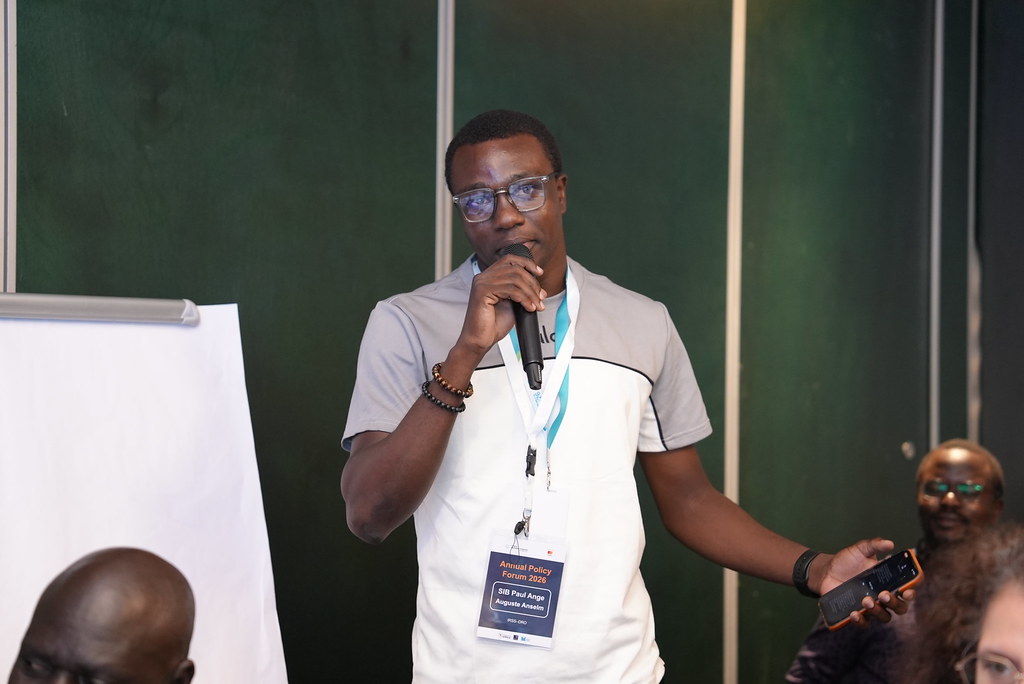
It is this conviction that has shaped his career as a scientist and now brings him to the Africa Pandemic Sciences Collaborative’s Policy Advisory Stakeholders Group (PAS-G), where he joins a growing network of African researchers and policymakers working to strengthen the use of scientific evidence in decision-making across the continent.
From Research to Reality
A doctoral candidate in Medical Entomology at the Regional Institute of Health Sciences Research (IRSS/DRO) in Bobo-Dioulasso, SIB’s scientific journey spans biomedical analysis, bacteriology, virology and vector-borne disease research.
His institution’s work extends beyond malaria to include dengue fever, nutrition, sociology and infectious diseases, reflecting the interconnected nature of public health challenges. That multidisciplinary environment has shaped the way he approaches science – not as an end in itself, but as a tool for solving real-world problems.
For SIB, malaria remains one of the most urgent.
Despite decades of progress, Burkina Faso continues to carry an enormous malaria burden. In 2025 alone, the country recorded more than 10 million confirmed cases and approximately 3,500 deaths.
Behind those numbers, he sees children missing the chance to grow up healthy, families overwhelmed by illness, and a health system under constant pressure.
His team responded by strengthening prevention efforts, supporting the rollout of the new malaria vaccine and distributing long-lasting insecticidal nets (LLINs), particularly among the youngest and most vulnerable.
“The difficult choice was on who to prioritise; who bears the heaviest burden of disease?” He says, “We decided to focus heavily on prevention – new vaccine and long-lasting insecticidal nets – for the youngest children, because they are the ones most at risk of dying if nothing is done.”
When Evidence Meets Policy
Working on the frontlines of malaria control has taught SIB that scientific evidence does not automatically become public policy. Often, the greatest challenge lies in deciding where scarce resources should be invested.
“You know, it’s really difficult to do everything at once, given the enormous challenges and the scarcity of resources,” he explains. “We can’t do everything 100 per cent at the same time.”
Those realities have reinforced an important lesson for him: policymaking is rarely about choosing between good and bad options. More often, it is about making difficult decisions with limited resources while ensuring those decisions are informed by the best available evidence.
But evidence alone is rarely enough.
Implementing change also requires trust, dialogue, and an understanding of the people expected to embrace new approaches.
“Sometimes, to implement a major reform, especially in the healthcare sector, it’s necessary not only to adopt a pedagogical approach, but also to be willing to negotiate with stakeholders whose interests are often affected,” he says.
“These innovations very often encounter resistance from certain officials who are entrenched in outdated methods, and from a segment of the population that doesn’t always immediately grasp the proposed changes.”
For SIB, successful public health programmes depend as much on listening as they do on leading. His approach is simple: build trust first, communicate clearly, and turn resistance into collaboration.
Making Science Count
Throughout his career, SIB has remained focused on ensuring research does not stop at publication. His work is driven by a desire to see scientific findings translated into programmes, interventions and policies that improve people’s lives.
“Data plays a crucial role, especially in healthcare,” he says. “It is through this data that we gain credibility with policymakers and partners.”
Reaching communities is equally important. His team complements scientific research with public engagement through symposia, open-house events, and radio and television campaigns, recognising that meaningful public health action depends on both evidence and public understanding.
A Voice for the Next Generation
SIB joined the Policy Advisory Stakeholders Group.
As one of the youngest members of the Collaborative’s Policy Advisory Stakeholders Group, SIB brings his technical expertise in malaria research, as well as practical experience navigating the complex intersection of science, implementation and policymaking.
SIB Paul Marie Ange with Vimbai Mukwekwezeke, the two newest members of the PAS-G
But working with experienced policymakers in the PAS-G, he hopes to contribute his perspectives drawn from both research and field implementation while learning alongside fellow and seasoned scientists and policymakers committed to strengthening evidence-informed decision-making across Africa.
His ambition extends beyond malaria.
He wants to see more young African scientists equipped not only to generate evidence but also to understand how policy is shaped – and how scientific voices can influence the decisions that affect millions of people.
“It is through this that, together, our voices will carry more weight and credibility with our political leaders,” he says, “leading to a better Africa, safe from all pandemics.”
For SIB, the future of public health will not be determined by science alone.
It will be shaped by the choices leaders make with that science.
For many people, mathematics is associated with abstract concepts and rigid certainty. But for Professor Sheetal Silal, equations are tools for connecting data with decisions that affect people’s lives. Her journey to becoming a global leader in disease modelling was not linear, but shaped by important career decisions. From choosing not to pursue a corporate actuarial career to leading the World Health Organization Immunization and Vaccines Related Implementation Research Advisory Committee (IVIR-AC), Prof Sheetal has consistently chosen work that connects science with public purpose.
The importance of her work became particularly visible during the COVID-19 pandemic. While governments were trying to understand how the virus might spread, Prof Sheetal and her team worked for more than two years, often long hours, to provide the South African government with mathematical models that could support policy decisions during the crisis.
“I view my science almost as a vocation, as something beyond just the number—something that has greater purpose and gives my life meaning.”
Prof Sheetal Silal is a disease modeller, a Professor in the Department of Statistical Sciences at the University of Cape Town, and the Director of the Modelling and Simulation Hub, Africa — MASHA. She is also the chair of a WHO advisory committee, a principal investigator on multiple international research consortia, supervisor to 26 postgraduate students, and a professional dancer and sitar player. Her life seems less like a series of data points and more like a masterclass in tenacity.
She will tell you mathematics is a hobby. She will also tell you it saved her.
“I knew I would be very unhappy in a corporate job. I was brave enough to take matters into my own hands.”
A QUIET ACT OF DEFIANCE
Prof Sheetal grew up on the east coast of South Africa, in a farm town called Verulam, five generations after her ancestors arrived as Indian indentured labourers who were brought to work on sugarcane farms during the colonial period. She grew up during apartheid. In that context, her parents hoped she would pursue a stable career.
“Growing up during apartheid, your parents wanted you to take a safe career, one that would be guaranteed to provide you with a stable financial lifestyle. Actuarial science seemed like the obvious place to go.”
She did the degree. She was good at it. She was also bored.
“As much as it was mathematical in nature, it seemed a little pointless to me. Working in corporate, being in that sort of rigmarole. It was just a vicious cycle.”
What happened next was not dramatic in the way that pivotal moments usually are in the retelling. It was quiet, deliberate, and entirely hers.
“I didn’t tell my parents I had applied for a master’s degree. I didn’t even tell them I had a job interview. I applied for funding from the South African government, and only when I got the scholarship did I tell them: ‘Hey Mom and Dad, guess what? I’m doing my master’s.’”
They were not happy at first. She was the first person in her entire extended family to pursue a master’s degree. She remains the only one with a PhD.
“I don’t blame my parents for being nervous. It just sounded like I was being a student for longer to them, because they didn’t know any better. Now, of course, they have no regrets.”
THE MOMENT MATHEMATICS BECAME A TOOL FOR GOOD
In her master’s programme, Sheetal encountered a field called operations research — and it changed everything.
“It was the first time I learned how mathematics could be used to solve real problems: modelling diseases, optimising systems, supporting decision-making. Suddenly I could see that mathematics could be used to make the world a better place.”
The example that made this clear was a malaria model designed to help inform decisions about changing a drug where resistance had emerged.
“That was marvellous. I’m not a doctor. I’m a mathematician. But what I can do on a computer can help government make better decisions. That’s when I knew.”
“Every project we do is for a different government, for a different population, solving a different crisis.”
TWENTY HOURS A DAY, FOR TWO YEARS
The clearest test of what that purpose meant came during the COVID-19 pandemic. MASHA was developing models for the South African government. The world was in a panic. Decisions needed to be made quickly.
“We were working almost 20 hours a day for a period of over two years without weekends — just working and working relentlessly because our work had meaning. It was supporting a nation. It was helping to make better decisions.”
What made MASHA’s contribution distinctive was not just speed, but scope. While many models were predicting case numbers and hospital admissions, nobody was adequately accounting for what lockdowns cost the people who could not afford them.
“In many African settings, people cannot work from home. If you are a construction worker or a seasonal farm worker, there is no working from home. During lockdowns, many large portions of our communities were without wages. And this had a big impact on unemployment and on the economy.”
The CLEAR-Africa Consortium, which Prof Sheetal leads as Principal Investigator, is building the next generation of models that integrate both epidemiological impact and macroeconomic consequences so that future governments are not forced to choose between health and livelihoods without understanding the true weight of that choice.
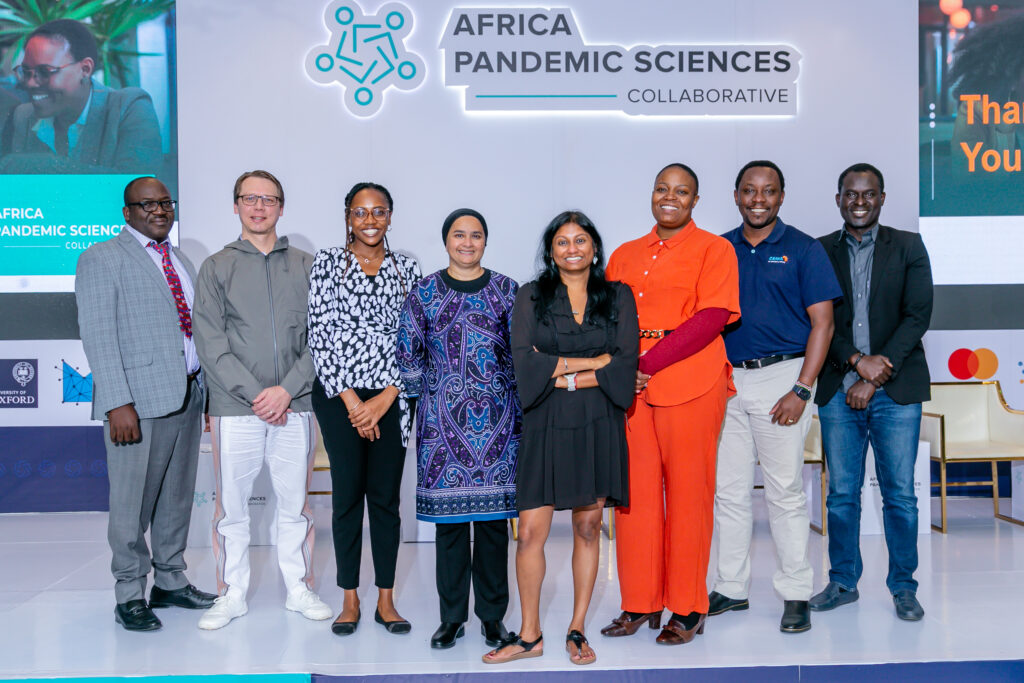
Prof Silal poses for a photo with her CLEAR Africa consortium during the Africa Pandemic Sciences Collaborative Inception Meeting
PAYING IT FORWARD
In September 2024, Prof Sheetal’s team submitted a model for diphtheria, tetanus and pertussis booster doses to the WHO’s IVIR-AC committee. It was the first submission from a Low- and Middle-Income Country (LMIC) institution in the committee’s five-year history.
“In the five years of my being on the committee, it was the first time I recall a submission from an LMIC. To me, that’s a pivotal moment. It signals a shift: that LMIC modelling groups are growing, and that our work can be of global relevance, developed exclusively on the African continent.”
Her reason for seeking out these leadership positions is deliberate and relational. As a junior modeller, she watched her own supervisor, Prof Lisa White, fight for funding, for Global South voices, for space at the table.
“She was carving a smoother road for me. Now it is my responsibility to pay that forward — to remove the unnecessary obstacles so that my students don’t have to fight the same battles. And when they get into this space, they will learn from my example and do the same for the generations that come.”
Under her supervision alone, she currently has 11 PhD and 15 master’s students. On the day of this interview, she was also preparing a candidate for a PhD interview the following morning, after hosting them as an intern following their master’s.
ON BEING A WOMAN IN THE ROOM
“For me personally, I have not experienced what I believe might be discrimination due to gender. A lot of that has to do with confidence, with fighting for my place. But that also means you enter a system and find your place on that system’s terms. That doesn’t necessarily mean the system was right to begin with.”
What she observes in others is different.
“I’ve seen brilliant women not being acknowledged and denied space. But the responsibility should not be placed entirely on these women to fight back. Systems should be designed so that anyone can access the space based on their scientific qualifications.”
She draws a sharp distinction between equality and equity — one she returns to often.
“Equity is the important term. There are wrongs that need to be righted. It is about achieving equity, maintaining the balance between those who have been historically disadvantaged and those who have not.”
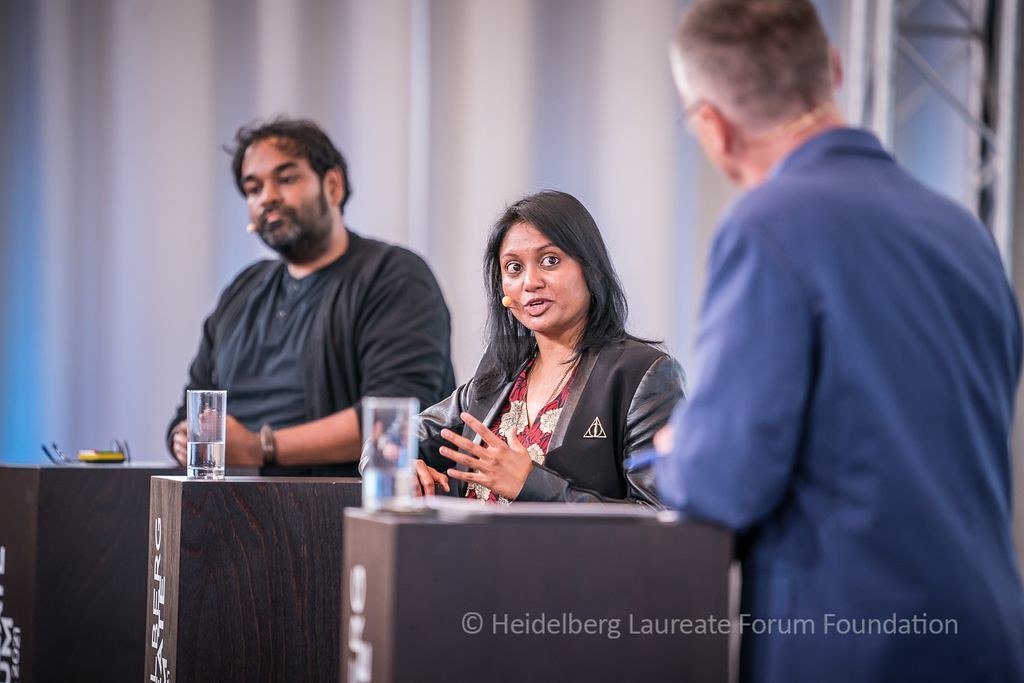
Prof Sheetal speaks during the Hot Panel session at the 8th Heidelberg Laureate Forum on the topic “Mathematics of Disease: The Science of Epidemic Modelling”
ON TENACITY
For young women entering science, she offers not a checklist but a framework.
“Have a purpose. Understand why you want to be in this field. Purpose and perseverance are the characteristics that will see you through.”
But above all else, she emphasizes one quality.
“Tenacity. Being able to fight for what you want. Look for solutions. Don’t be afraid to ask. Don’t be afraid to learn. Be humble, because we are always learning. And that’s how we become better.”
“As a mathematician alone, I will not know everything I need to know. Being able to work well with others, and respect what others know, is equally important to growing in your own field.”
THE FULL PICTURE
When asked how she manages the demands of students, research leadership and international travel, Prof Sheetal answers simply.
“It’s about making space. Every portion of your life gets that space. I use time efficiently. And when I close my laptop, that’s it — it’s done. When I’m concentrating on relaxing, I’m just relaxing. When I’m at work, I’m at work.”
She bakes for her staff. She dances professionally. She plays the sitar. She will tell you these things are not in tension with the 20-hour COVID days or the WHO committee chairing. She will tell you it all comes together.
Her one wish for women in science on the continent, which also falls during International Women’s Month is clear.
“My wish is that we create a decision-making system where women, men, and all minority groups have a voice throughout the entire process — not just in making decisions, but in implementation. Not just in creating advice, but also as receivers of health. It’s a systemic approach.”
Women have an important role in delivering healthcare, shaping policy decisions and contributing scientific expertise.
“I was just curious to see what happens in the human body.”
That simple, relentless curiosity set Dr Christine Sekaggya-Wiltshire on a remarkable journey – from a holiday conversation with her uncle to medical school, from internal medicine to a PhD, and from patient care to leading a multi-country scientific research consortium.
Along the way, she confronted doubt, stereotypes, and quiet expectations. Yet she never wavered in her belief that competence should speak louder than gender.
This is her story.
Q: Who is Dr. Christine Sekaggya?
I am a clinician and a scientist – a research scientist, currently working at Uganda’s National Referral Hospital as a physician in haematology. I am also a research scientist at the Makerere University’s Infectious Diseases Institute.
My research has largely focused on HIV and tuberculosis, and I have conducted clinical trials on related drugs. I am deeply excited by academia, but I also love treating patients.
I am married and have six children. When I am not at work, I am with my children, and spending time with them brings me great joy. I also love movies, traveling and visiting new places.
Q: How did your journey into science begin?
At first, I wanted to be like my mother. She was a businesswoman and a lawyer. But when I realised, I would have to study history to pursue law, I thought, maybe not. I liked stories, but I didn’t enjoy being told to memorise and retell them in exams.
I had an uncle living in Nairobi who was both a doctor and a scientist. When I was about 15, I spent my school holiday with him, and he noticed that I was doing well in sciences.
That holiday changed everything. I returned from Kenya saying, “I’m going to do medicine.”
I don’t even remember exactly what he told me. I just knew I had decided to pursue science. Partly, I was avoiding arts subjects. But I was also genuinely curious. I used to tell my mother, “I just want to see what happens in the human body.”
Q: What shaped your journey through medical school and beyond?
Medical school was hard. I failed one of my first tests and quickly realized that what they teach you in class is only a tiny fraction of what you need. You must read the entire textbook.
At first, I wanted to be a surgeon. I liked the feeling of fixing things. But the late nights made me realize it was not compatible with the family life I wanted. Therefore, I chose internal medicine.
During my master’s degree, I used to say I would never do a PhD. But in my third year, I felt a strong urge to pursue one. On the day of my master’s defence, someone told me, “Christine, just get a PhD. No one is going to care what it is in. Just get one.”
At the same time, my department needed haematology specialists. So, I took on that role while starting my PhD in TB drug pharmacokinetics and later training in haematology.
Q: How did you balance science and motherhood?
It is hectic.
One of my professors once told me, “You have to learn to juggle your glass balls.” Children, home, books, patient care, research – they all felt like glass balls.
I received a lot of support from my husband and my mother. I remember expressing breast milk in the postgraduate room between lectures. Everyone could hear the machine. I would drop my baby at my uncle’s house, go to work, return at lunchtime, and then go back again in the evening.
That family support allowed me to thrive.
When there were doubts about my ability to complete my PhD because I had young children, it made me more resilient. Knowing that people were questioning me pushed me to prove that I could do it.
Q: What barriers still exist for women in science?
Sometimes, we do not have a strong go-getter mentality, or we express it more subtly. We hesitate to market ourselves. We downplay our achievements. We do not negotiate salaries as well as men.
We often see many women in middle management and very few at the top. Institutions may have policies that treat everyone equally, but mindsets still matter.
Someone may assume that a man can travel 18 days a month without interruption, while a woman may need to return home. Those assumptions influence decisions.
Q: Are there subtle expectations placed on women in professional spaces?
If there is an event at your organisation, when it comes to organizing food or registration, it is almost always the women. How many times do people ask men to stand up and check if everyone has eaten? Usually, they ask a woman.
The stereotype of what a woman does at home follows her into the workplace.
We do not have to be the ones to serve and handle the “soft” tasks at work. We should be able to make difficult decisions and contribute to strategy just like men.
When we are sitting around a boardroom table, people should see me as a scientist first, and then as a female scientist. Gender can come later. See me first as a scientist.
Q: Why does women’s leadership in science matter?
If we do not break these barriers now, our children will face the same ones.
Women bring a unique perspective to leadership and decision-making. We often look beyond stereotypes and see the human side. Not necessarily in a motherly way, but in a holistic way.
The organisation and awareness we develop at home can translate into the workplace. Equity and gender balance is important in all sectors.
I have been a doctor for 20 years. Currently, I am leading a consortium supported by the Africa Pandemic Sciences Collaborative as the Principal Investigator, and I also serve as Assistant Clinical Head in the Department of Internal Medicine at Makerere University. My work involves collaboration across countries, capacity building, teaching and mentoring.
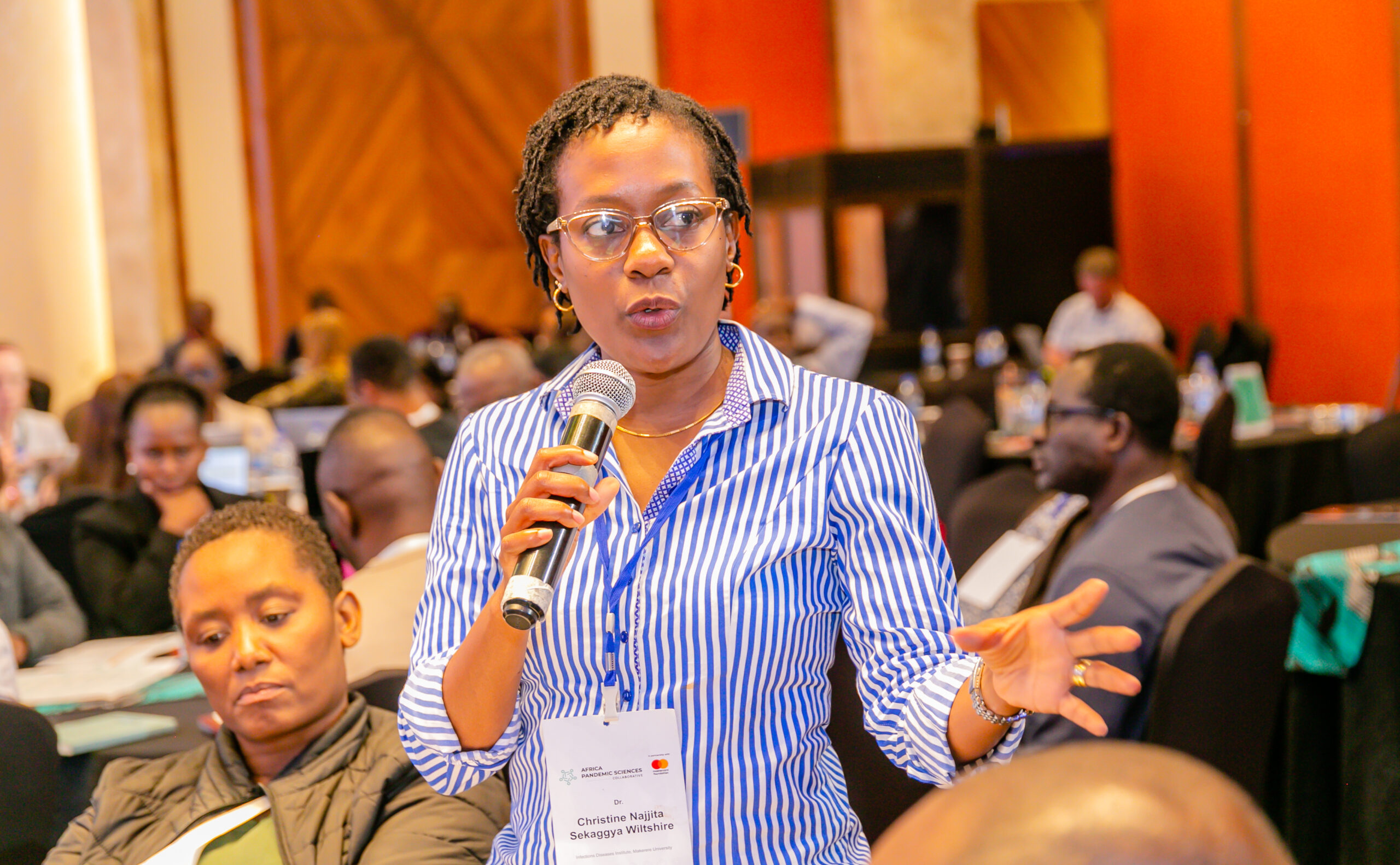
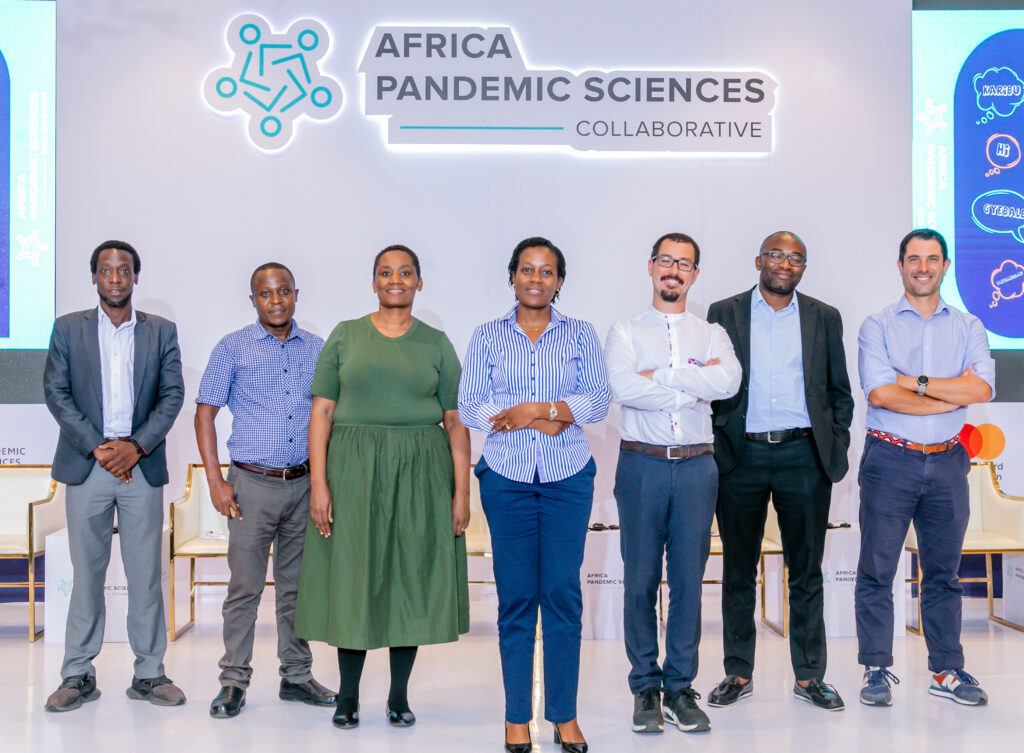
Dr Christine Sekaggya-Wiltshire leads the ACCEPT-Africa consortium under the Africa Pandemic Sciences Collaborative
Q: What promise should society make to girls who dream of being scientists?
Make room for women – and consider everything they come with.
We want to be seen as scientists first. But in the background, there is more that we carry, and that should be acknowledged.
We need to speak up about our abilities. We need to negotiate better terms and conditions. We should not have to choose between career and family.