The 2026 Ebola outbreak originating in the Democratic Republic of the Congo (DRC) represents a significant regional and global public health concern and highlights the critical role of surveillance, preparedness, scientific leadership, and regional collaboration in responding to epidemic threats.
SITUATIONAL OVERVIEW
In May 2026, health authorities in the DRC confirmed an outbreak of Ebola disease caused by the Bundibugyo strain of the virus in Ituri Province in the country’s northeast. Cases have since expanded to North and South Kivu provinces, and have also been reported in neighbouring Uganda, prompting heightened regional surveillance and preparedness efforts.
The World Health Organization (WHO) subsequently declared the outbreak a Public Health Emergency of International Concern (PHEIC), citing a growing number of reported infections in affected areas, the potential for cross-border spread, and the complex humanitarian and security conditions affecting response efforts in eastern DRC. The declaration is intended to strengthen international coordination and support for outbreak control measures.
As of 11 June 2026, 695 confirmed cases and 138 confirmed deaths had been officially reported in the DRC and Uganda. Health authorities are also investigating additional suspected cases as part of routine outbreak surveillance and case finding. While the outbreak is unfolding in a context marked by population displacement, insecurity, misinformation, and limited humanitarian access in some affected areas, national authorities, researchers, and regional partners continue to deploy surveillance, diagnostic, and response measures to detect cases, interrupt transmission, and guide public health action.
The Bundibugyo strain presents particular challenges because no approved vaccines or specific treatments currently exist for this strain of Ebola virus. The outbreak therefore underscores the urgent need to strengthen Africa’s preparedness and response systems, accelerate research and development efforts, and expand equitable access to diagnostics, therapeutics, and outbreak response infrastructure.
At the same time, the response is also demonstrating Africa’s growing scientific leadership and the strengthening of African research ecosystems, public health institutions, and collaborative preparedness networks.
This is why the Africa Pandemic Sciences Collaborative exists. It aims to strengthen African-led research and institutions to enable them to conduct world-class, innovative research, and translate findings into impactful, locally relevant solutions that contribute to shaping and strengthening pandemic response and resilience and, ultimately, benefiting the continent’s health ecosystem for future generations.
The Africa Pandemic Sciences Collaborative stands in solidarity with affected communities and expresses its sincere appreciation to frontline healthcare workers, researchers, surveillance officers, laboratory teams, community health workers, and local leaders working tirelessly to contain the outbreak and protect lives. It is also committed to working with relevant health authorities and partners to effectively respond to this current outbreak.
THE COLLABORATIVE RESPONSE
Across the Collaborative’s Epidemic and Pandemic Science Innovation and Leadership Networks (EPSILONs), researchers and partners are actively supporting outbreak response and mitigation efforts spanning therapeutics, diagnostics, disease surveillance, clinical research, modelling, behavioural science, and community engagement.
In the DRC, researchers from our ACCEPT-Africa consortium are on the frontlines leading efforts with relevant health authorities and teams to identify cases, contain the spread of the virus, and find preventive and curative solutions to the outbreak. Specifically, we applaud the work led by Prof Placide Mbala and other colleagues at the Institut National de Recherche Biomédicale (INRB), Kinshasa – DRC, who played a leading role in identifying the Bundibugyo strain. Now that the specific pathogen is identified, they continue to support diagnostics expansion, setting up clinical trials for available candidate treatment, and studying the genetic makeup of the circulating strain of Ebola.
In Uganda, researchers from the ACCEPT-Africa and PREPARE consortia are supporting the national Scientific Advisory Group and helping strengthen regulatory readiness and emergency-use treatment protocols. Some priority drugs have been identified, and these are being fast-tracked for approval. Additionally, the team is drafting training materials for healthcare workers administering experimental treatments. Once approved, the bulk of the work will be around tracking patient outcomes. In addition, researchers at the Uganda Virus Research Institute (UVRI) are working with the Ministry of Health to strengthen near-point-of-care diagnostic systems using innovative Loop-Mediated Isothermal Amplification (LAMP)-based technologies to improve rapid detection capacity. LAMP is a rapid, highly sensitive molecular diagnostic technique that is portable and cost-effective used to detect specific DNA or RNA sequences in clinics or remote field work settings.
Despite these noble efforts, teams from both countries continue to face major challenges. These include shortages of rapid diagnostic tests, laboratory consumables, infection prevention supplies, and decentralized testing systems, alongside urgent needs for stronger disease modelling, community engagement interventions, clinical trial infrastructure, and biobanking systems to support both immediate response efforts and long-term preparedness.
With a combined ecosystem comprising of more than 40 lead researchers, the Collaborative network has consulted with the EPSILON PI’s in both countries and have proposed a range of coordinated scientific and operational interventions to support the Ebola outbreak response across affected countries. These include support for epidemiological and economic modelling through the CLEAR-Africa consortium to help optimise resource allocation and response planning in the DRC and Uganda, alongside adaptation of community education and prevention materials developed by the University of Ibadan to support locally relevant public health communication. The PREPARE consortium is also contributing diagnostic innovation through development and validation of surveillance and diagnostic platforms for zoonotic and epidemic-prone diseases, while the SPIL-OVA consortium is exploring the use of archived outbreak samples to support rapid diagnostic development and monoclonal antibody research targeting the Bundibugyo strain. Together, these efforts reflect the Collaborative’s interdisciplinary approach to strengthening diagnostics, surveillance, modelling, community engagement, and long-term epidemic preparedness across Africa.
Meanwhile, additional preparedness efforts are ongoing across our partner institutions in Liberia, Burkina Faso, Ghana, Mali, Kenya, and other countries through surveillance strengthening, laboratory readiness, traveller screening systems, risk communication and community engagement (RCCE), and cross-border preparedness activities.
URGENT PRIORITIES FOR RESPONSE AND PREPAREDNESS
The Collaborative has set aside some financial support, outside of the primary grants awarded to the research consortia, towards rapid response and preparedness efforts. The allocation of these resources will target four priority areas identified through consideration of the current outbreak dynamics, partner consultations, broader Ebola response experience, and lessons from previous epidemics.
1. Addressing diagnostic and laboratory gaps
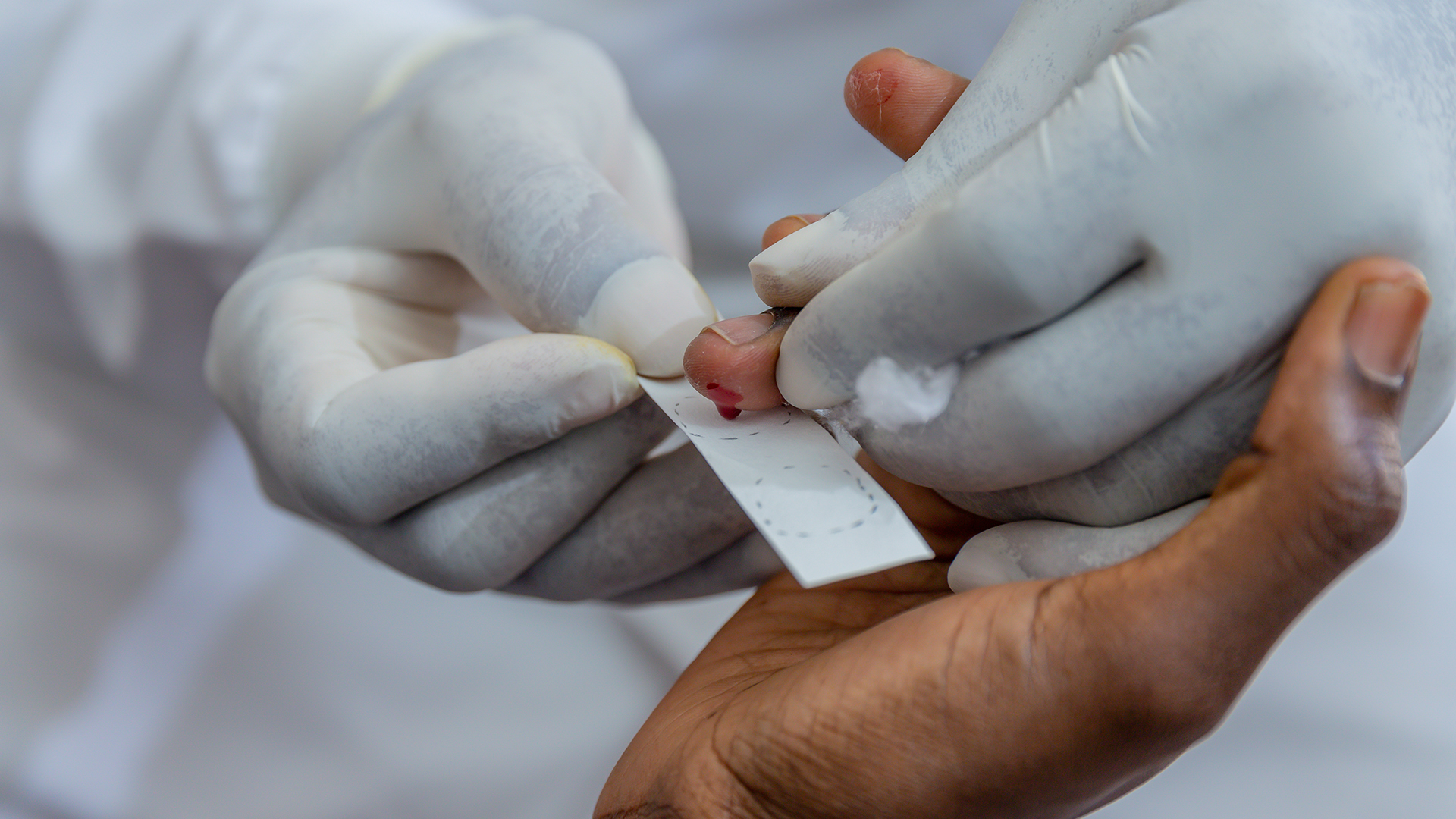
Rapid diagnosis remains essential to early intervention, interrupting transmission chains and strengthening outbreak containment. However, both the DRC and Uganda continue to face shortages of rapid diagnostic tests, laboratory consumables, infection prevention supplies, and decentralized testing systems. There is a need to expand diagnostics to the affected communities using near-point-of-care diagnostic solutions that are sensitive to the Bundibugyo strain, to enable early medical care for cases and contact tracing. Additionally, despite the lack of reported cases in at-risk neighbouring countries, the deployment of diagnostic equipment across the region will enable the active tracking of suspected cases, leading to the containment of the virus.
2. Strengthening disease modelling and epidemic intelligence
Real-time modelling, analytics, and epidemic intelligence remain critical for guiding outbreak response operations, forecasting transmission dynamics, optimising resource allocation, and informing public health decision-making.
Collaborative partners have identified an urgent need to strengthen disease modelling and epidemic intelligence systems to support more effective outbreak response and preparedness efforts. Priority areas include enhanced epidemiological and economic modelling, integrated outbreak analytics, real-time data sharing, cross-border surveillance coordination, and decision-support tools to help Ministries of Health and response agencies make faster, evidence-based decisions during the outbreak.
3. Expanding One Health surveillance and animal sampling
The recurrence of Ebola outbreaks in similar geographic regions has reinforced the importance of strengthening One Health approaches that integrate human, animal, and environmental health systems. Researchers in the DRC have highlighted the urgent need to expand animal sampling and zoonotic surveillance, investigate potential spillover events, strengthen genomic sequencing and ecological monitoring systems, and improve understanding of environmental drivers of transmission, recognizing that stronger One Health surveillance will be essential not only for controlling the current outbreak, but also for preventing and anticipating future epidemic threats emerging at the human-animal-environment interface.
BUILDING AFRICA’S FUTURE PANDEMIC RESILIENCE
The current Ebola outbreak is a reminder that preparedness cannot begin when outbreaks start. Sustainable epidemic resilience requires long-term investment in African scientific leadership, research institutions, public health systems, skilled workforces, trusted community engagement systems, and regional collaboration.
Through its network of EPSILONs, the Africa Pandemic Sciences Collaborative is supporting interdisciplinary research, workforce development, diagnostics innovation, therapeutics research, modelling systems, behavioural science, and One Health preparedness approaches across the continent.
Importantly, Africa’s future preparedness will depend not only on infrastructure and technology, but also on people. Developing and retaining the next generation of African scientists, clinicians, laboratory experts, epidemiologists, public health leaders, and data scientists will be critical to ensuring long-term resilience.
Disease outbreaks do not respect borders – and preparedness cannot stop at them. Sustained investment in African-led science and collaborative preparedness systems is therefore essential for the continent’s future and the global health security.
Preparedness is built between outbreaks – not during them.
CALL FOR PARTNERSHIP AND SUPPORT
We are ready to work together with governments, funders, research institutions, development partners, industry, and regional organizations to support:
- Equitable access to diagnostics, treatments, and outbreak countermeasures
- African-led research and preparedness systems
- Disease surveillance, modelling, and laboratory strengthening
- One Health and zoonotic surveillance systems
- Long-term workforce development and scientific leadership
The current outbreak is not only a response challenge. It is an opportunity to strengthen the systems, partnerships, and scientific ecosystems needed to protect Africa, and the world, from future epidemic and pandemic threats.
For enquiries regarding partnership opportunities, or more information on our work relating to the current Ebola outbreak, please email: [email protected]