WEBINAR: Informing an equitable pandemic response with social science evidence – strategies and recommendations for researchers, policy actors and funders 

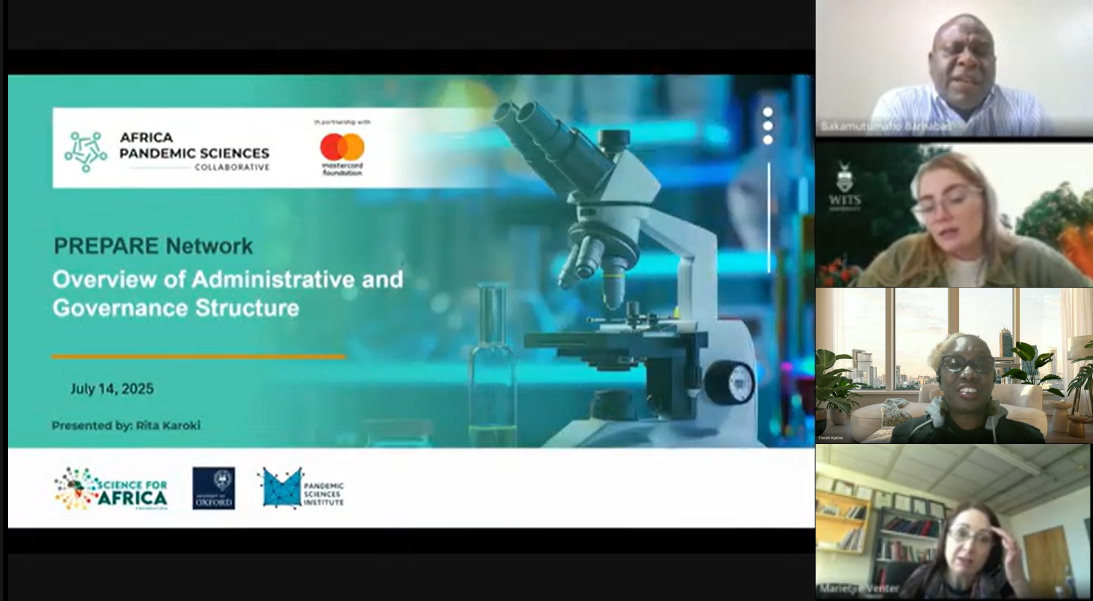
Africa’s pandemic response efforts will remain incomplete without fully integrating social science into policy and planning. This was the central message from a recent webinar co-hosted by the Africa Pandemic Sciences Collaborative and the Kenya National Public Health Institute. 

Titled Integrating Social Science Evidence for Pandemics Policy Making, the webinar delved into continent-wide experiences of dealing with pandemics to understand how social science contributes to pandemic preparedness and response in practice.  

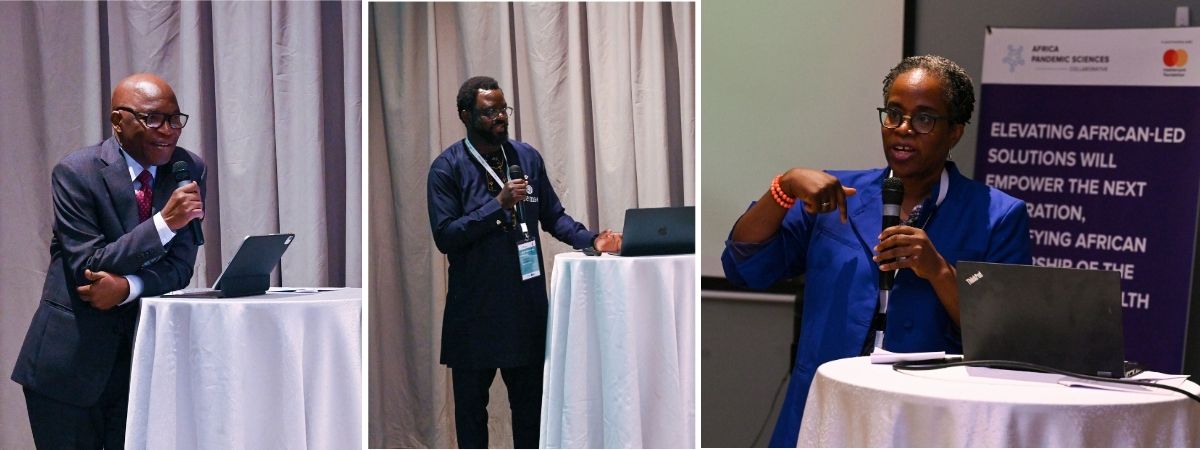
 Two social scientists, Teklu Cherkose (Armauer Hansen Research Institute) and Professor Kellen Kiambati (Karatina University), presented an arguement from their research and practise on why this shift is overdue – and how it can be achieved. 

 Mr Cherkose focused on COVID-19 response in Kenya and Ethiopia, highlighting the social sciences evidence behind specific policy interventions – including rapid household surveys that revealed income and food insecurity. Supported by theoretical framing, he outlined the relevance of social science evidence to pandemic policy: from understanding public behaviour and building trust to addressing inequalities worsened by pandemics and improving feedback loops. 

Mr Cherkose also identified existing gaps in the use of social sciences evidence, including the deployment of “ad hoc” and reactive measures. His recommendations to policy actors, researchers and funding partners also included advocacy for the institutionalisation of social science capacity.    

“National emergency management institutions should establish permanent, interdisciplinary units that brings social, behavioural and biomedical expertise together, not just during a crisis, but as critical parts of health systems planning. These units will ensure that social science and epidemiological evidence is combined in managing outbreaks from the start,” said Mr Cherkose.  

 Professor Kiambati reinforced these messages by drawing on practical experiences from her research working with communities. Like Mr Cherkose, she, too, highlighted institutionalisation as a strategy. Consolidating the use of trusted local structures for communications and engagement activities, she argued, will result in increased institutional capacity for social science evidence sharing and uptake. 

 While sharing strategies to address ‘murky’ policy making processes, Professor Kiambati emphasised the central role of co-creation between researchers and policy makers. She also positioned knowledge valorisation as a policy objective, creating practical value for the entire society. 

 The principles of co-creation, capacity strengthening and knowledge continuity highlighted by Mr Cherkose and Professor Kiambati reflect principles that underpin the Collaborative’s model. The Collaborative is designed to connect institutions, strengthen scientific ecosystems and ensure evidence flows seamlessly across borders and disciplines. This is how Africa builds long-term resilience. 

 The open invitation and attendance from institutions across Africa aligned with the Collaborative’s vision of promoting partnerships and collaborative exchanges across the continent. During and after the event, the speakers received multiple requests to connect and move conversations forward, demonstrating the potential of their work in contributing to a more robust research ecosystem across the continent. 

 Their shared recommendation, embedding social science expertise in health systems before crises hit, underscored a growing recognition across the continent that pandemic preparedness must be as much about people as pathogens. 


Watch the full webinar recording on YouTube via the link below:


About our Speakers 

Teklu Cherkose is a social science researcher and PhD fellow at the Armauer Hansen Research Institute in Ethiopia under DELTAS Africa II ALC consortium.  His work investigates how health interventions can be effectively integrated into communities.  Using a mixed methods approach, he examines the interplay of actors, interventions, and context by integrating patient, community, and stakeholder perspectives, ultimately aiming to shape effective and sustainable health policies. Mr Cherkose is also a grantee of the Africa Pandemic Sciences Collaborative’s Individual Policy Exchange Program (iPEP).  

Professor Kellen Kiambati is a social scientist from Kenya, specialising in pandemic response and community engagement. Her work turns research findings into practical action. Prof Kellen is an Associate Professor at Karatina University and an SFA Foundation grantee under the Possible Africa initiative. 


From promise to policy: Empowering young African researchers to shape the continent’s pandemic preparedness

She sat and spoke before a packed room, her voice calm but resolute.

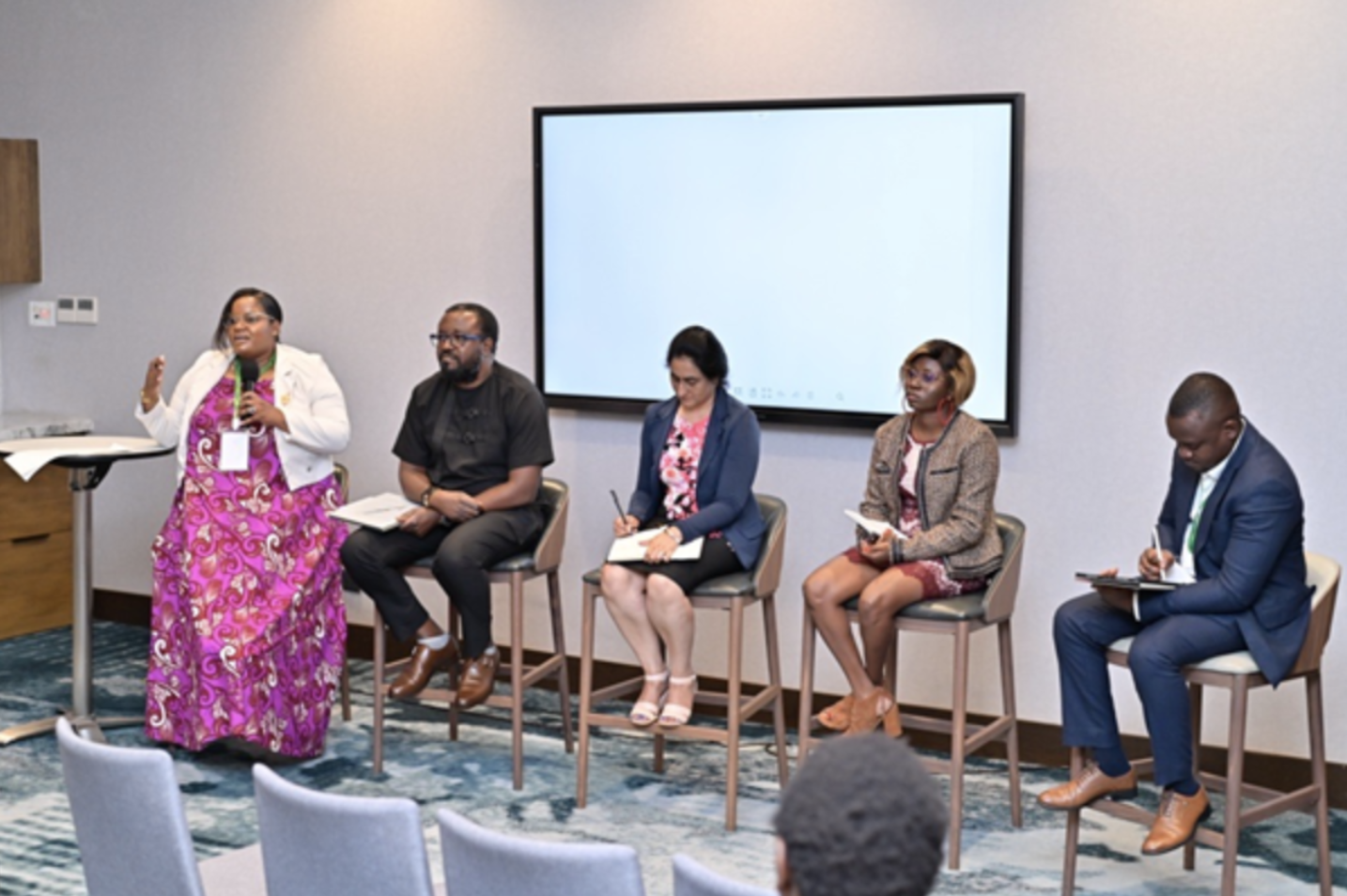
As one of the youngest panellists at the 2025 Annual Policy Forum held in Nairobi, Kenya, Merville Essetcheou sat alongside seasoned public health experts and leaders from institutions like the Africa CDC and Zambia’s National Public Health Institute to explore what it really means to be prepared for the next health emergency.

Discussions ranged from the critical role of domestic funding for research, to the importance of inclusive agenda-setting and the urgency of addressing capacity gaps. Panellists also called for a shift from a vaccine-centric preparedness model to a more comprehensive approach – one that embraces diagnostics, treatment, and innovation, including intellectual property reforms that support African-led solutions.

Reflecting on her experience as a young researcher, Merville gave voice to the struggles she has faced; the struggle to access quality data, the difficulty of being heard in policy spaces dominated by more experienced voices, and the constant balancing act of learning while leading. Yet, she also spoke of hope – the kind built on networks of support, mentorship and the unwavering belief that African researchers should be shaping African policy.

Hailing from Benin, Merville is a PhD biostatistics candidate specialising in infectious disease modeling at the University of Abomey-Calavi, Benin. Her research focuses on non-vaccine interventions and malaria dynamics in West Africa, applying advanced statistical methodologies to inform disease control strategies.

“Practical relevance must be the focus for research by bridging national and regional priorities. Knowledge translation officers need to be empowered to bridge the research-policy gap,” mentioned Merville Essetcheou.

For many in the room, this was just another panel.

For Merveille, it was a defining moment.

Her story isn’t unique. It mirrors the experiences of other four young, talented and determined researchers from across the continent selected to take part in the first cohort of an Individual Policy Exchange Programme (iPEP) fellowship. The iPEP fellowship is an initiative of the Africa Pandemic Sciences Collaborative and seeks to enhance the adoption of evidence from science into policy by promoting cross-working of young researchers and policymakers from institutions across Africa that are engaged in the complete range of epidemic and pandemic-related research.

The panel wasn’t just about exchanging ideas. It was about recognition – recognition that young professionals like Merveille are not future leaders; they are leaders today.

Empowering for Influence and Growth
Hosted alongside the inaugural Evidence for Development (Evi4Dev) Conference, the Annual Policy Forum was an initiative of the Africa Pandemic Sciences Collaborative. The forum served as a vibrant platform to connect policy, science and leadership through a series of curated engagements designed to amplify African voices in pandemic preparedness.

At the core of the Collaborative’s efforts lies a deep commitment to mentoring and equipping Africa’s emerging generation of scientists and policy leaders. This is where the Individual Policy Exchange Programme (iPEP) shines. Merveille and her peers are part of this programme, which provides young researchers with opportunities to connect their work to real-world policymaking.

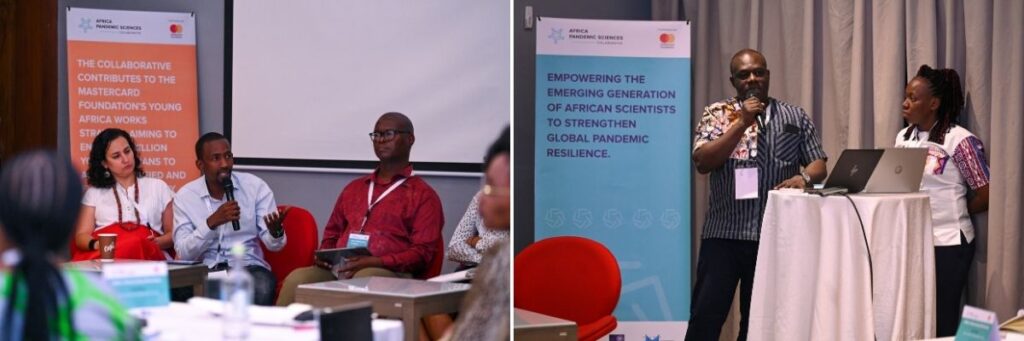
During the Annual Policy Forum, these five young researchers participated in breakfast mentoring sessions. Over coffee and conversation, the iPEP fellows presented their projects to senior scientists and policymakers from different professions, cadres and nationalities, before rotating across ‘speed tables’, receiving individualised appraisal of their projects. They received pointed feedback – not just about sharpening their research focus, but on changing their mindset from a research-oriented focus to a more strategic policy influencing approach – how to communicate effectively, tailor recommendations, and be strategic about policy influence.

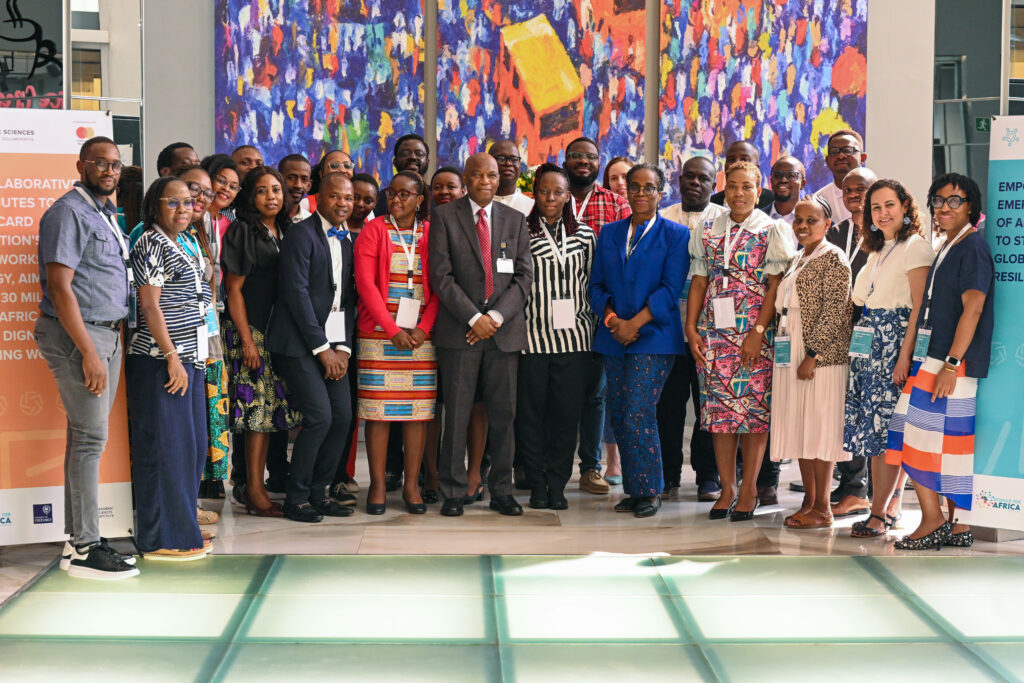
iPEP fellows take a front row seat as they pose for a photo with senior scientists and mentors at the Annual Policy Forum.

The format was personal, inclusive, and practical – even allowing for French-speaking participants to present and engage in their preferred language.

More than a networking event, this session created a feedback loop between early-career researchers and decision-makers. The insights gathered here will inform the design of future iPEP cohorts, ensuring that the programme continues to meet the real needs of its participants and the policy spaces they aim to influence.

Looking Ahead
The Mastercard Foundation’s support for the iPEP programme is part of its broader Young Africa Works strategy, which aims to enable 30 million young Africans – 70% of them young women to access dignified and fulfilling work by 2030. The Africa Pandemic Sciences Collaborative advances this goal by nurturing the next generation of scientists, innovators, and policy leaders to shape Africa’s public health future.

Merveille’s experience in Nairobi is a powerful example of how thoughtful investment in talent yields returns in policy, health, and long-term development.

For Merveille and her fellow iPEP researchers, the 2025 Annual Policy Forum was more than just a conference. It was a launchpad. A proving ground. A powerful example of how thoughtful investment in young talent yields returns in policy, health, and long-term development of cross-generational leadership. A space where their voices were heard, their ideas refined, and their leadership affirmed.

As Africa strengthens its pandemic preparedness, it will need not just better systems – but bolder minds. Minds like Merveille’s, ready to lead.


Written by Alex Kandie and Janet Wesonga

New science partnership to strengthen Africa’s pandemic resilience

  • A groundbreaking research initiative is set to enhance Africa’s preparedness and response to future health crises.
  • The partnership will nurture and equip young African scientists to address epidemics and pandemics and support a thriving research ecosystem on the continent.
  • The Africa Pandemic Sciences Collaborative is a multi-year partnership between the Science for Africa Foundation (SFA Foundation), the Pandemic Sciences Institute (PSI) at the University of Oxford, and the Mastercard Foundation.

Nairobi, Kenya | Toronto, Canada | Oxford, UK, March 27, 2025 – The Science for Africa Foundation (SFA Foundation), the Pandemic Sciences Institute (PSI) at the University of Oxford, and the Mastercard Foundation today announce a new partnership to strengthen Africa’s resilience against future health threats.

The Africa Pandemic Sciences Collaborative will nurture and equip young African scientists – with the support of senior scientists – to address the current and future challenges of epidemics and pandemics. The goal is to create pathways for dignified and fulfilling careers in life science and to help build and retain a critical mass of high-calibre young scientists on the continent, ensuring knowledge continuity between generations of researchers while strengthening Africa’s resilience to emerging health threats.

The world, and Africa in particular, continues to experience outbreaks of infectious diseases with epidemic and pandemic potential, triggered and intensified by climate change, biodiversity loss, migration, displacement, and conflict. Increased and routine interactions between humans and animals – often driven by livelihood dependencies – create conditions for the spillover of pathogens.

In February 2025, there were 54 active outbreaks and 82 ongoing public health events across the continent. On average, Africa faces over 100 disease outbreaks annually, underscoring the urgency for scientific collaboration, health workforce development, stronger linkages with decision-makers, and coordinated preparedness and response. But despite representing approximately 17 percent of the global population, the continent produces only one-to-two percent of global health research publications, and there is an urgent need for sustainable funding to support career development.

Over the next six years, the Africa Pandemic Sciences Collaborative will strengthen partnerships between higher education and research institutions and policymakers in Africa and beyond to develop a thriving research ecosystem. The Collaborative will support institutions in conducting world-class, innovative research and in translating findings into impactful, locally relevant solutions that contribute to shaping and strengthening pandemic resilience and the broader health ecosystem.

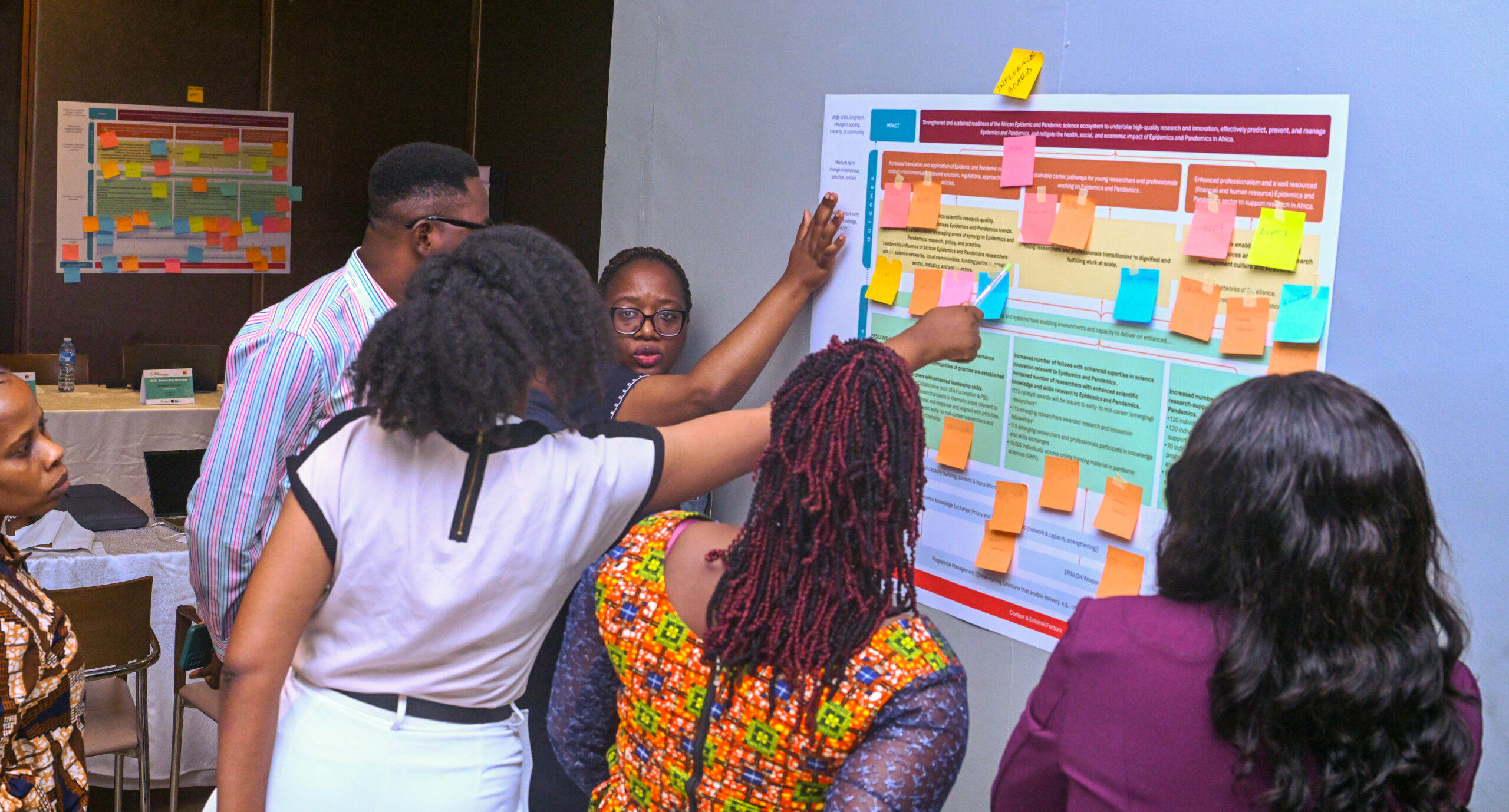
The Africa Pandemic Sciences Collaborative will deploy an innovative structure based on networks of excellence called Epidemic and Pandemic Sciences Innovation and Leadership Networks (EPSILONs), each led by outstanding African scientists.

The Collaborative combines the Science for Africa Foundation’s extensive experience in strengthening and promoting science and innovation across Africa with the scientific expertise of the University of Oxford’s Pandemic Sciences Institute, which has a mission to discover, create and enable practical solutions for infectious disease threats worldwide.

The Collaborative is supported by the Mastercard Foundation in alignment with its charitable purpose of youth education and relief of poverty. Its Young Africa Works strategy aims to enable 30 million young Africans, particularly young women, to access opportunities for dignified and fulfilling work by 2030.

Professor Tom Kariuki, Chief Executive Officer of Science for Africa Foundation, said: “At the SFA Foundation, we are both honoured and energised by the transformative work that this Collaborative will drive in strengthening the preparedness and resilience of African nations, and beyond, against current and future pandemics. Africa is home to brilliant young minds with the talent and ingenuity to develop science-driven solutions that can safeguard and improve the lives of over 1.37 billion people across the continent. However, realising this potential requires the right mentorship, support systems, and resources. Our strategic partnership with the Mastercard Foundation and PSI forms a critical step in turning these innovations into impactful, real-world solutions.”

Professor Sir Peter Horby, Director of the Pandemic Sciences Institute at the University of Oxford commented: “COVID-19 showed us the vital importance of scientific research and innovation in developing and testing vaccines, treatments and diagnostics, ultimately saving lives and livelihoods. But it also exposed the fragility of global solidarity and the deeply ingrained inequity in who is empowered to generate new scientific knowledge and who benefits from that science. Five years on, it’s more important than ever that we support African-led, science-backed solutions to infectious disease threats. This partnership will nurture and train the next generation of African scientists, ensuring African priorities inform both regional and global solutions.”

Peter Materu, Chief Program Officer at Mastercard Foundation, said: “These investments will accelerate locally driven research, expand scientific leadership, and strengthen Africa’s ability to prepare for and respond to emerging health threats. By supporting a new generation of African researchers and institutions, this initiative will help shape a more resilient and self-sustaining health ecosystem across the continent.”

up-arrow white-up-arrow